attheitaliantable.com

  • attheitaliantable.com
  • Home
  • Recipes
  • Chef Gina Stipo
  • Join Gina & Mary in Italy!

February 13, 2015 by Gina Stipo Leave a Comment

Colatura – Italy’s Umami in a bottle

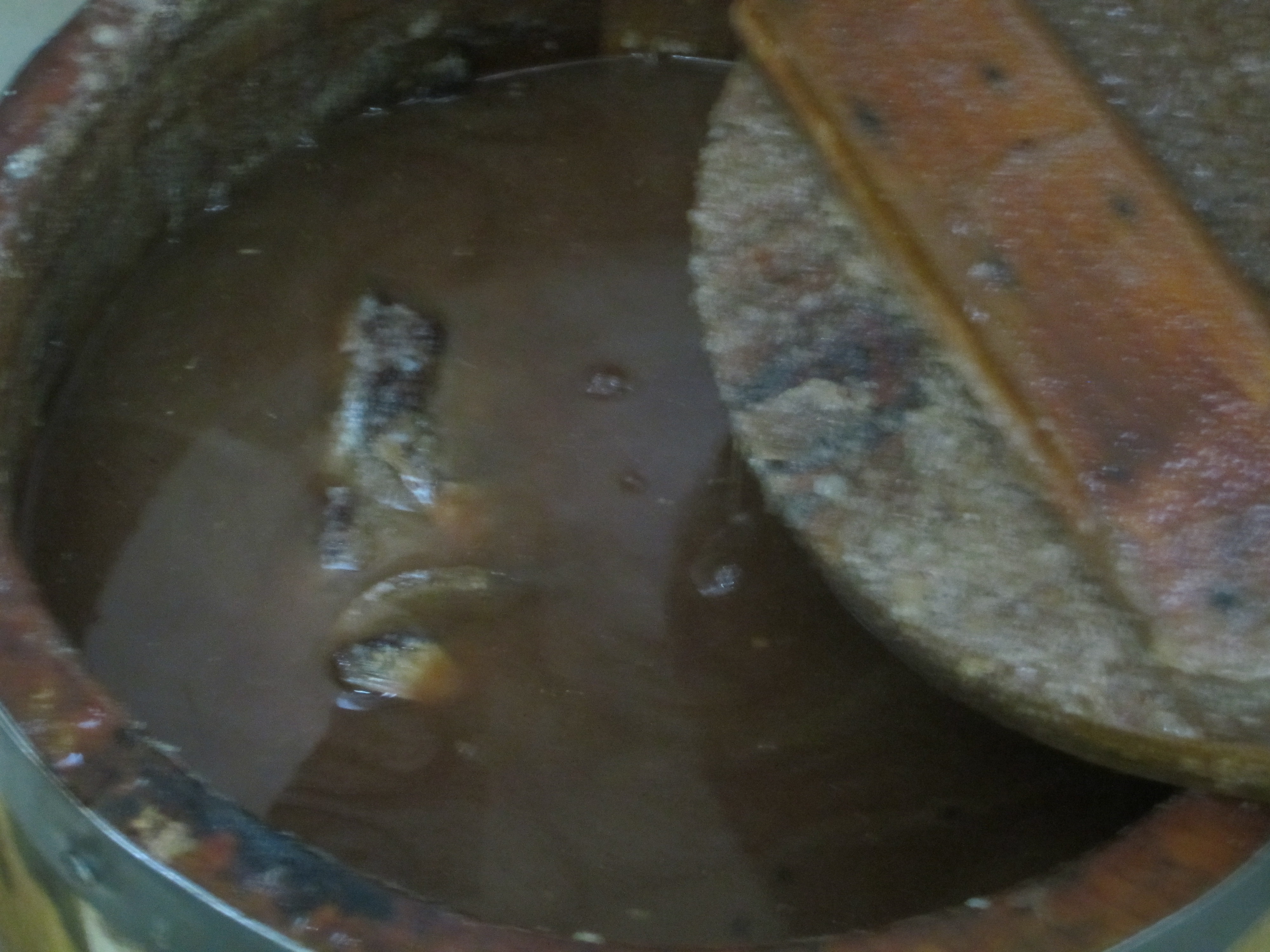
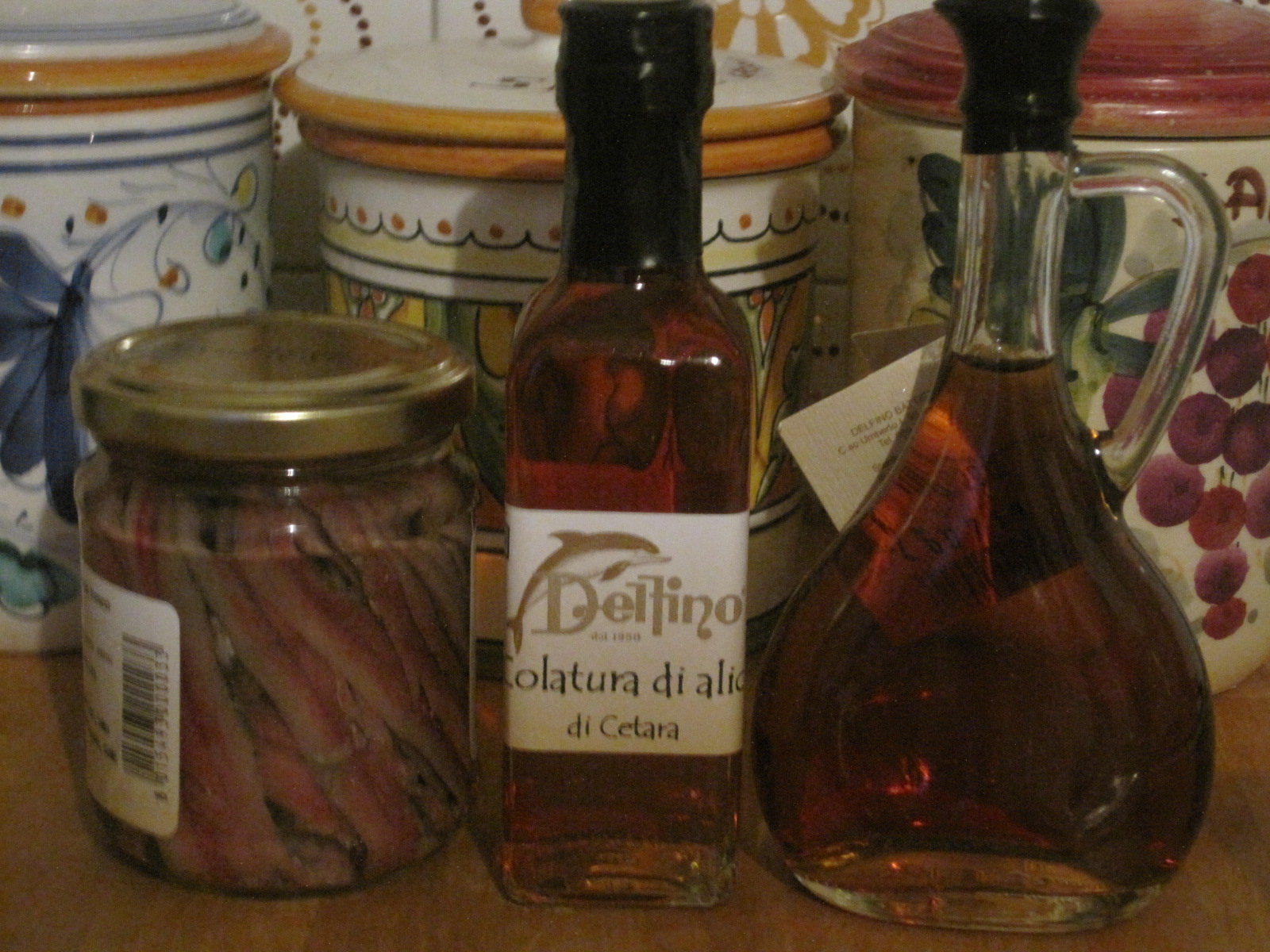
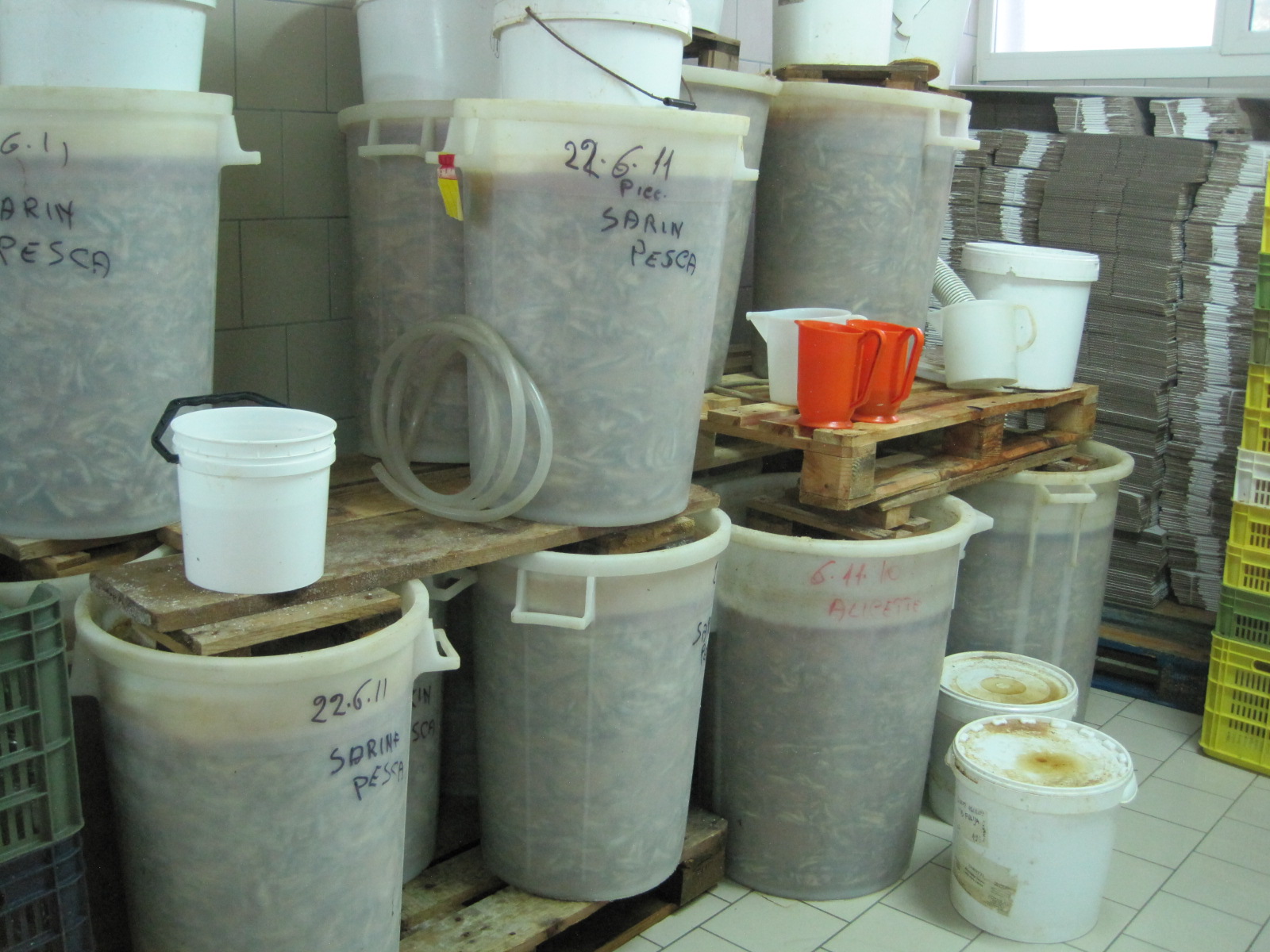
fish sauce of italyThe current issue of Saveur magazine has a short feature about the town of Cetara on the Amalfi coast and colatura, the special anchovy sauce they produce there.  An important ingredient in many of the dishes of the Amalfi coast and southern coastal towns of Italy, colatura is the juice drained off of anchovies that have been salted and aged in a wooden barrel for several months.  It is a concentrated fish sauce that both disgusts the nose and delights the palate and is undoubtably Italy’s best answer to the fifth taste, umami.barrel for colaturacolatura unfiltered
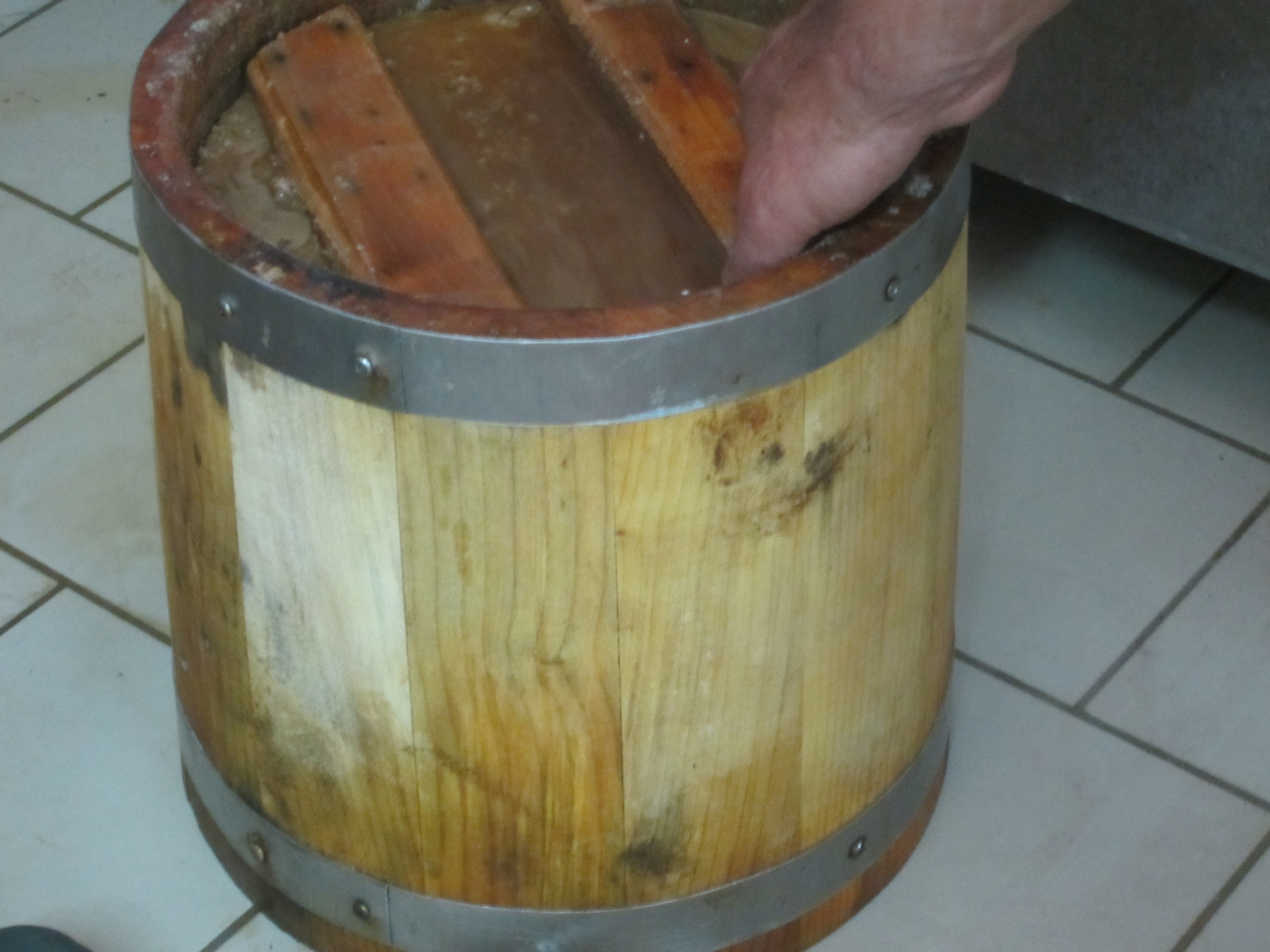
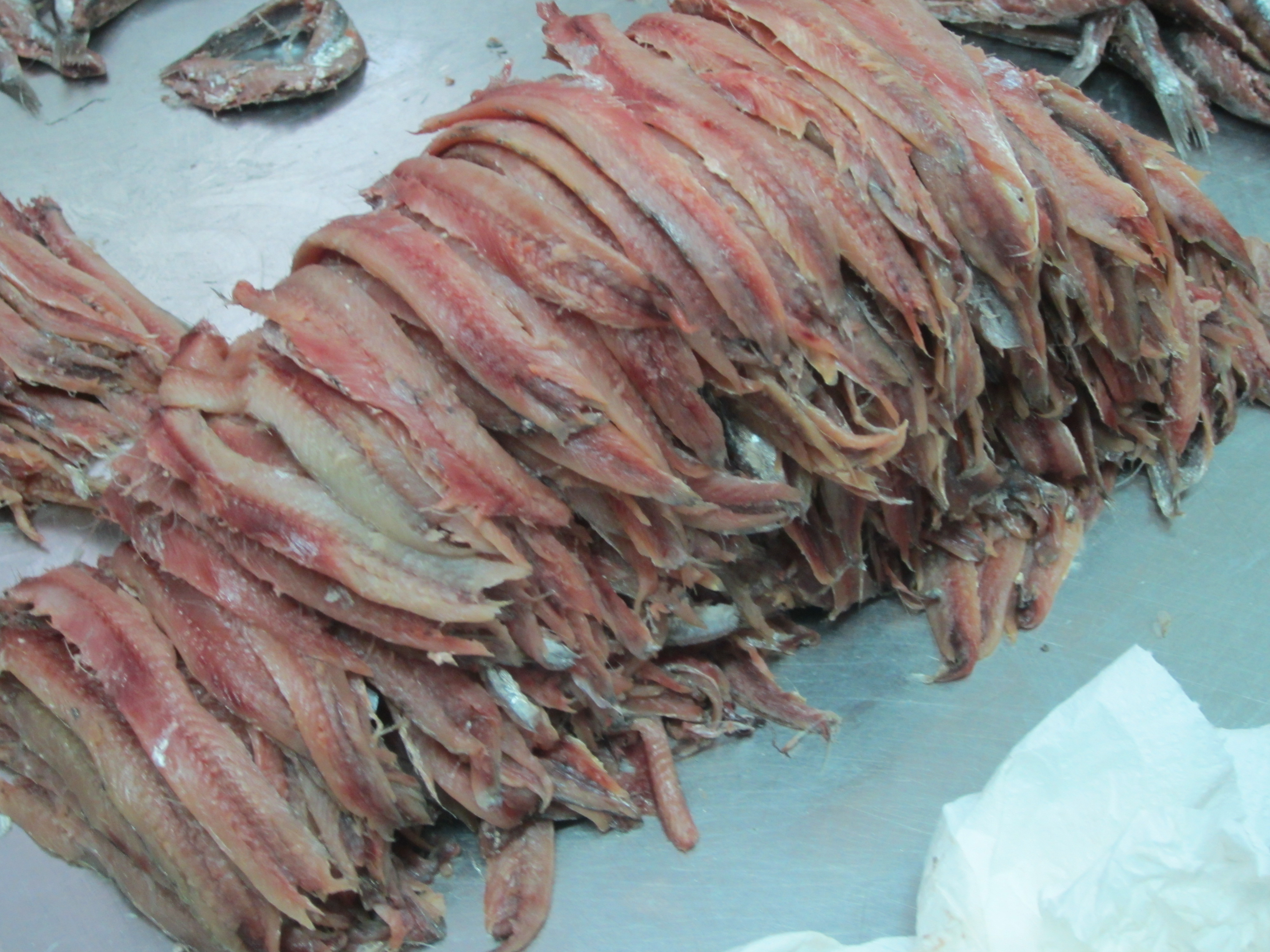
Based on an ancient Roman staple called garum, colatura has been made in this quaint fishing village for centuries.   Whenever we take groups to Naples and Campania, we always make a stop to see the women and men who labor at the task of cleaning the fish, salting them and then when they’ve been cured, removing the skin and bones and packing the anchovy filets in small jars. cleaning anchovy The process of cleaning, salting and packing in large plastic bins, or in the case of colatura, in small wooden barrels, takes place when the anchovies are running, generally from spring through early summer.  The process of cleaning and packing filets in jars is year-round.  Watching them work will make you grateful for whatever job you have!
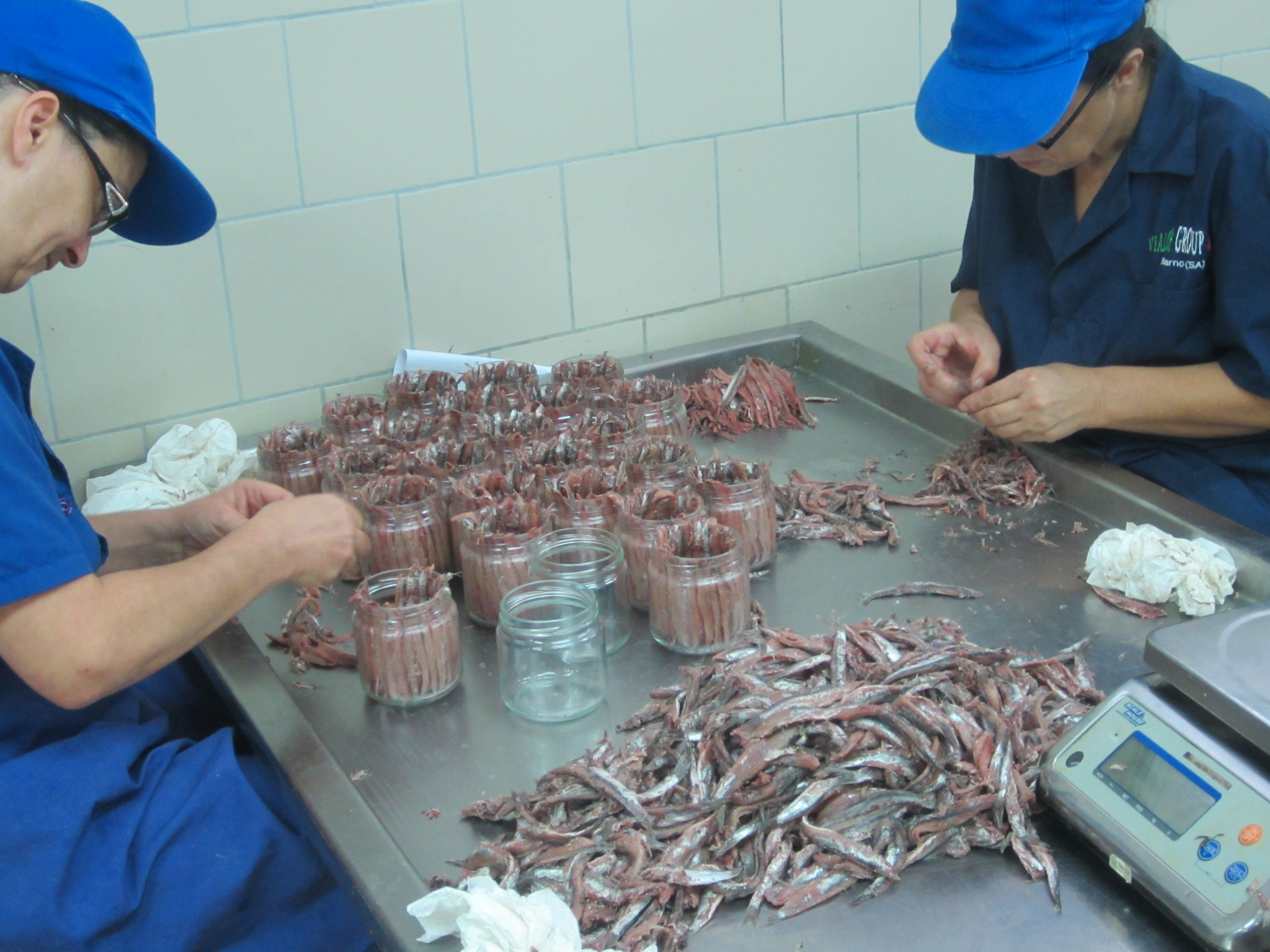
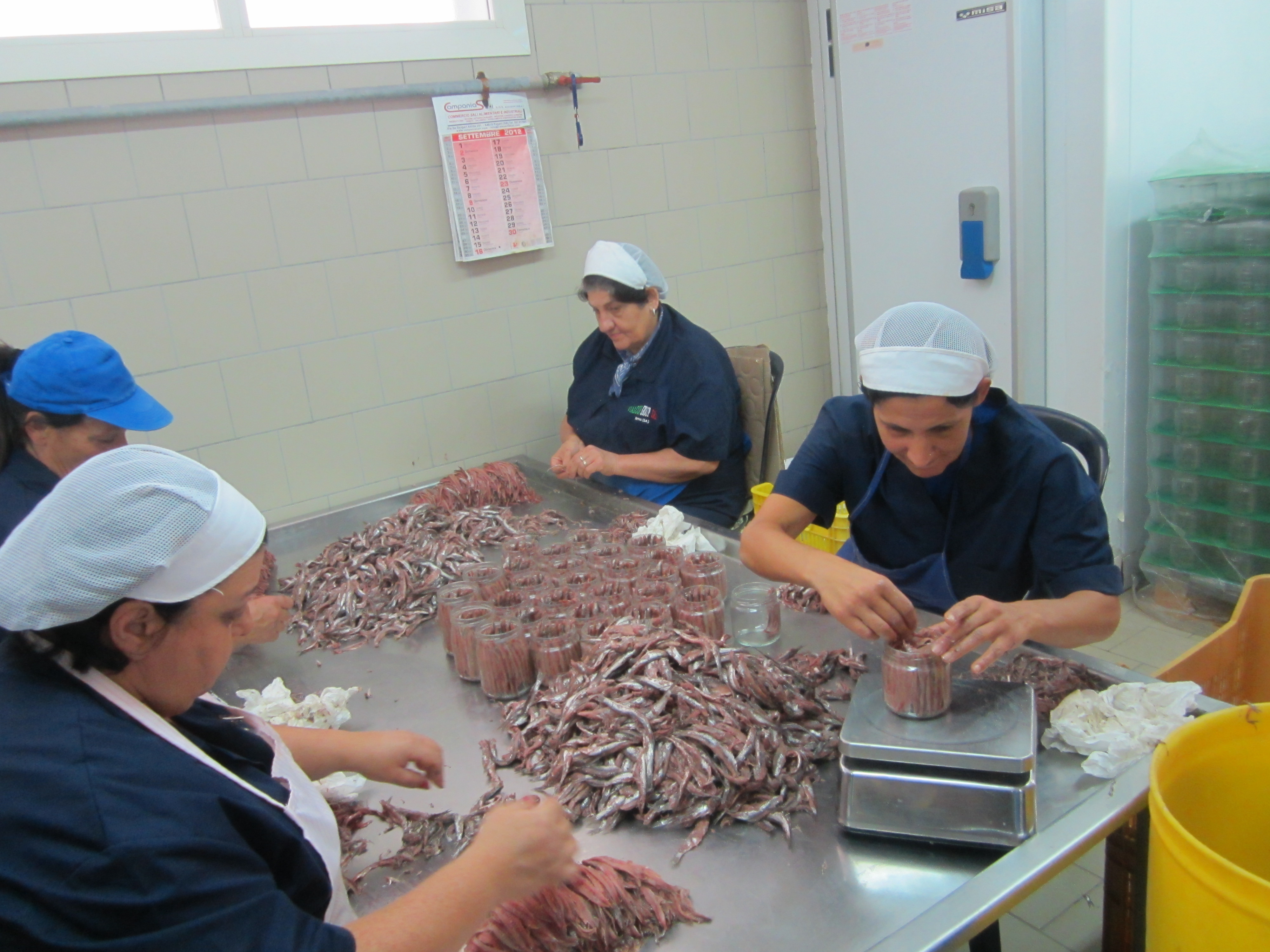
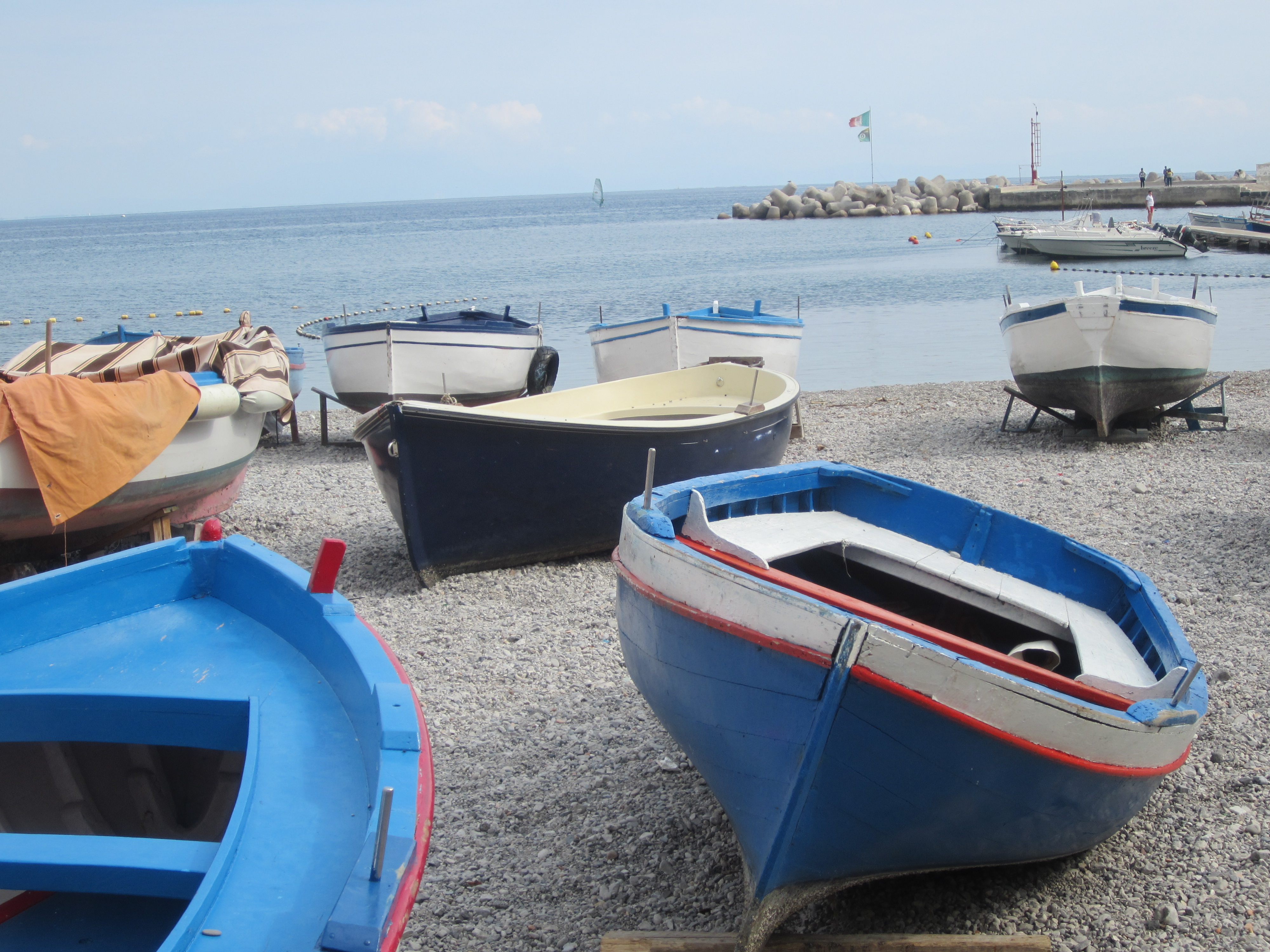
anchovy productionIt’s difficult to get in to see the process anymore due to hygiene controls in place, as with any food production facility.  But it’s Italy and if you know the right people long enough, it’s possible to get a pass to see the work done.barrels of anchoviessalted anchoviescetara fishing boatsCetara is a beautiful coastal town, with a small quaint beach on the Amalfi coast.  It’s quiet because all the buses and cars are frantic to get to better known towns and destinations, like Positano, Amalfi and Ravello.  I love stopping in Cetara long enough to lay on the beach and listen to the waves on the sides of the little fishing boats.cetara bridge
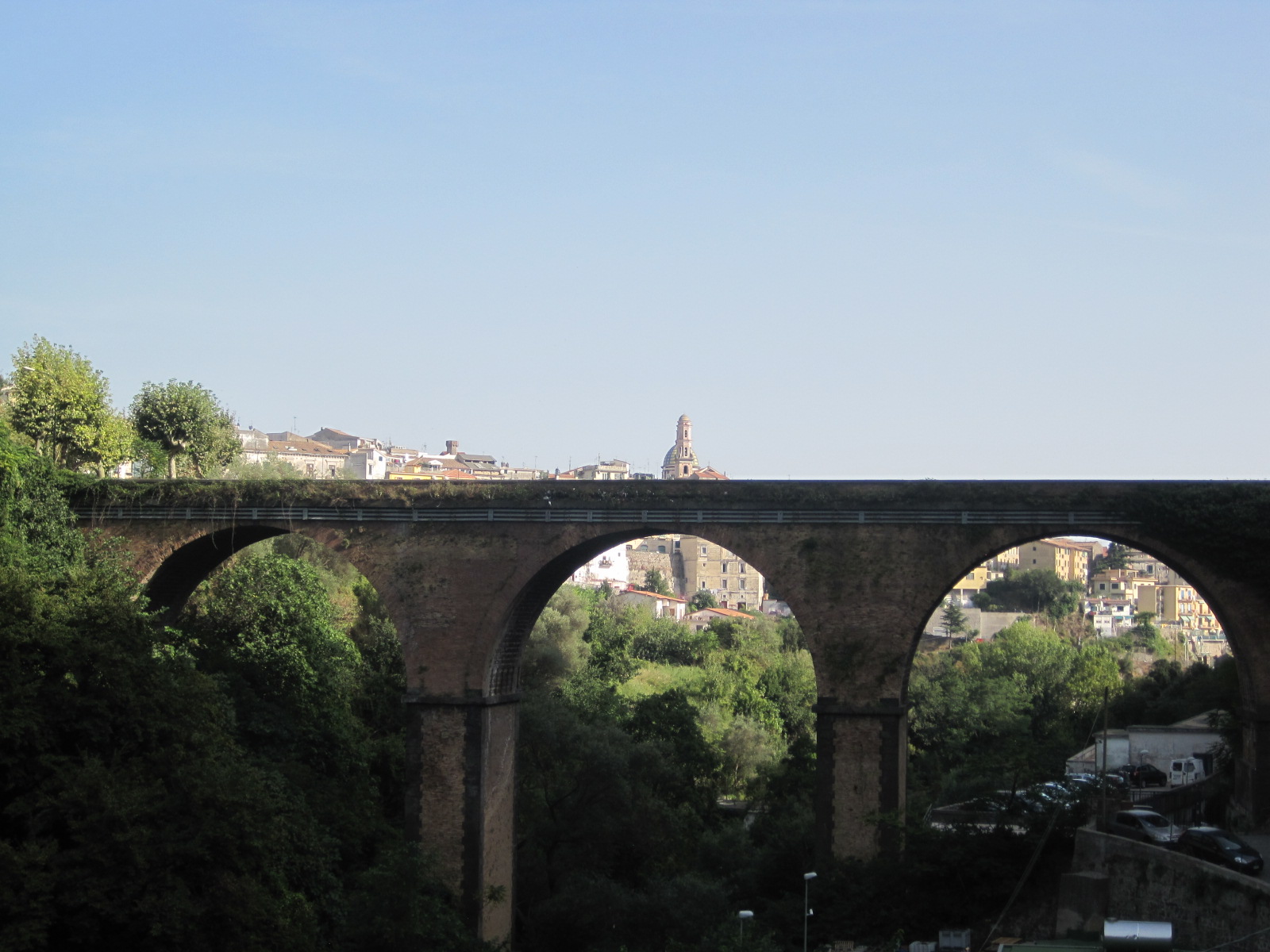
Most of the anchovy production is done in non-descript buildings under the bridge just after the town of Vietri sul Mare.
Filed Under: Blog Categories, Campania, Pasta, Salt Tagged With: anchovy sauce, cetara, colatura, Italian umami

January 17, 2015 by Gina Stipo Leave a Comment

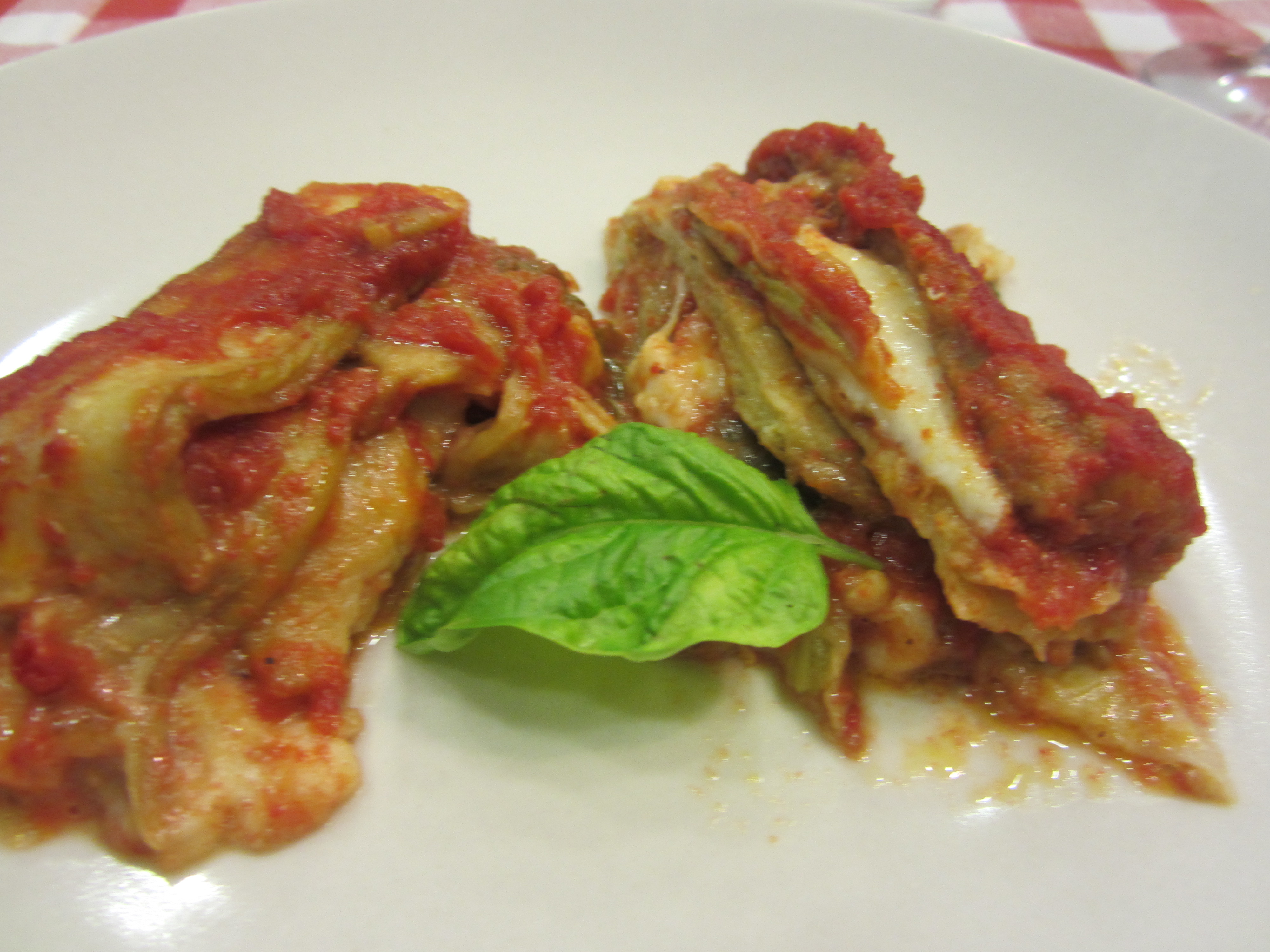
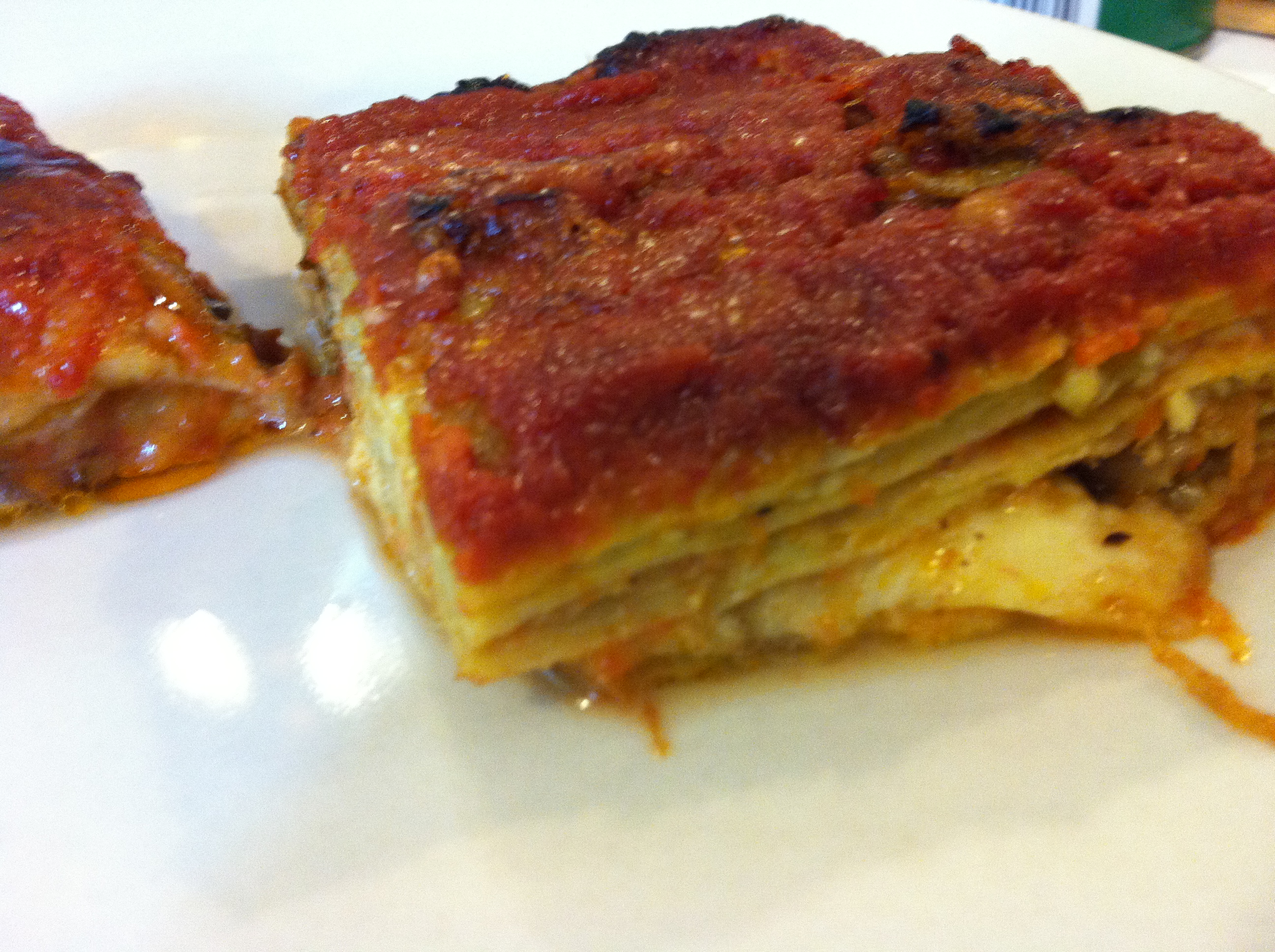
Parmigiana di Melanzane – eggplant parmigiana

eggplant parmLast September, we took a lovely group of people on a food and wine tour of Naples and Campania, one of my favorite regions.  It might be because my grandmother came from a small town, Montella, in the mountains to the east of Naples and so the food and language feel familiar to me.  But it’s more likely that the fresh seafood, mozzarella, easy-drinking wines, fried food and local pastry like baba and sfogliatelle have won my heart.  Not to mention my stomach.

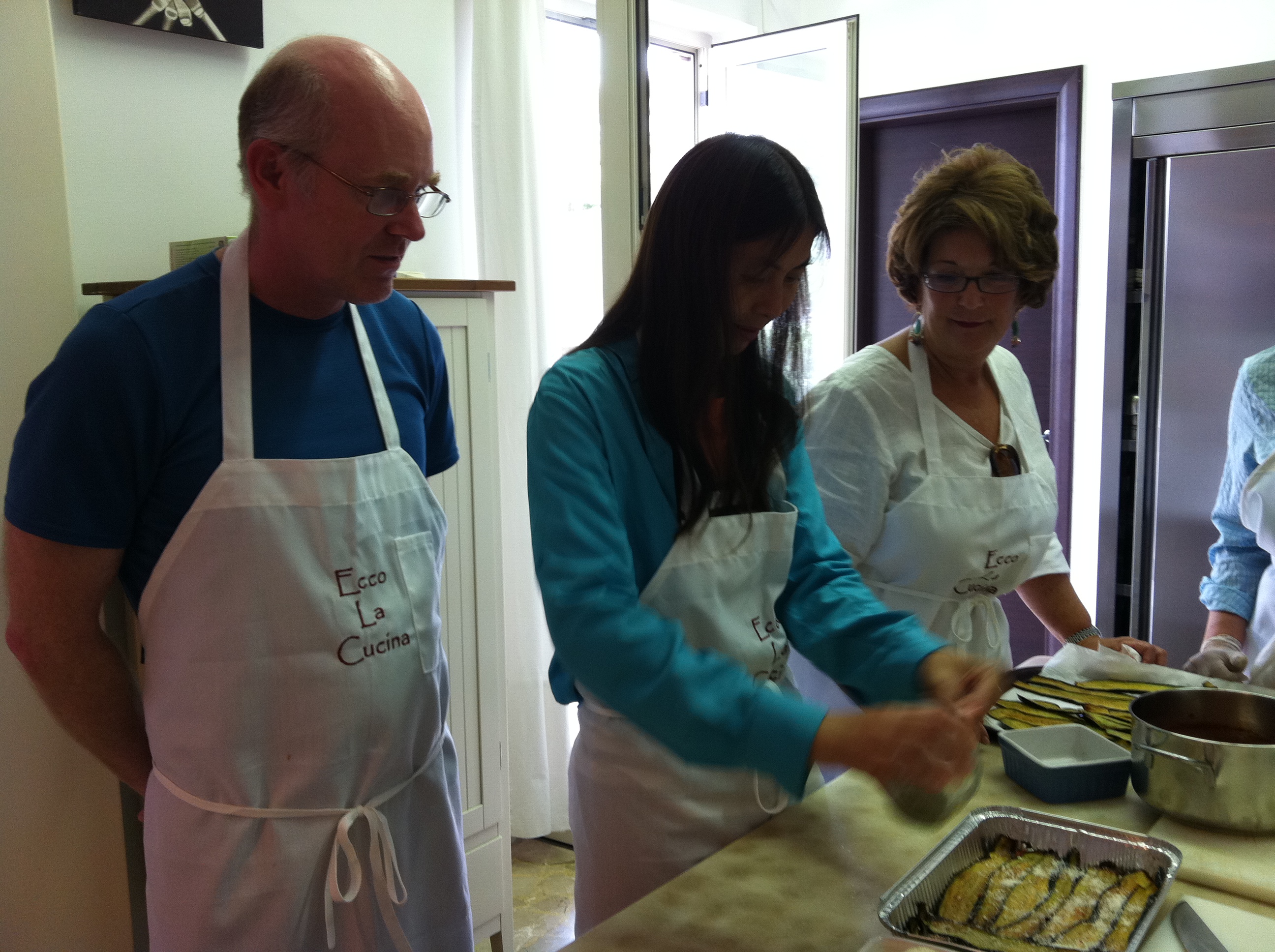
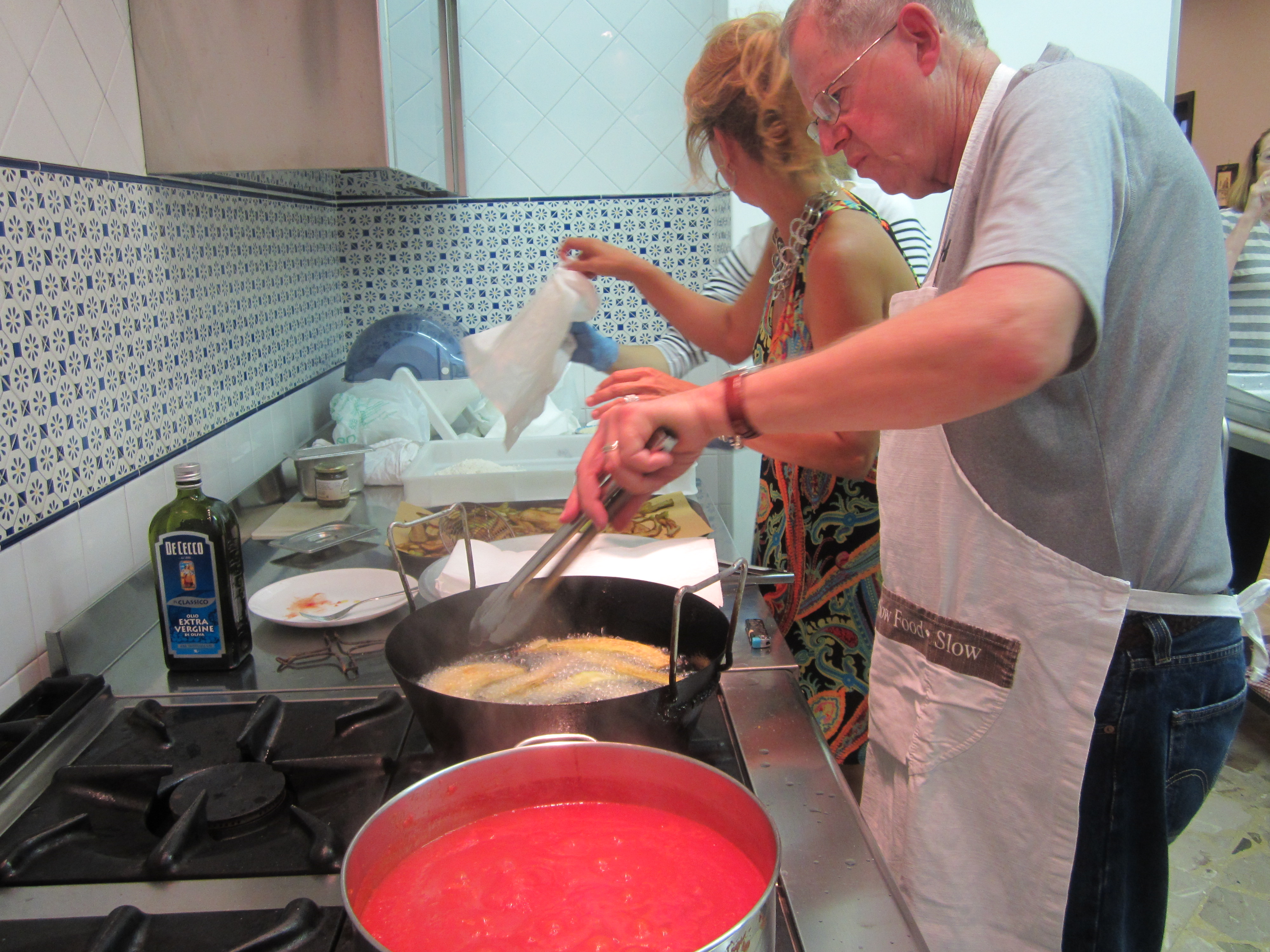
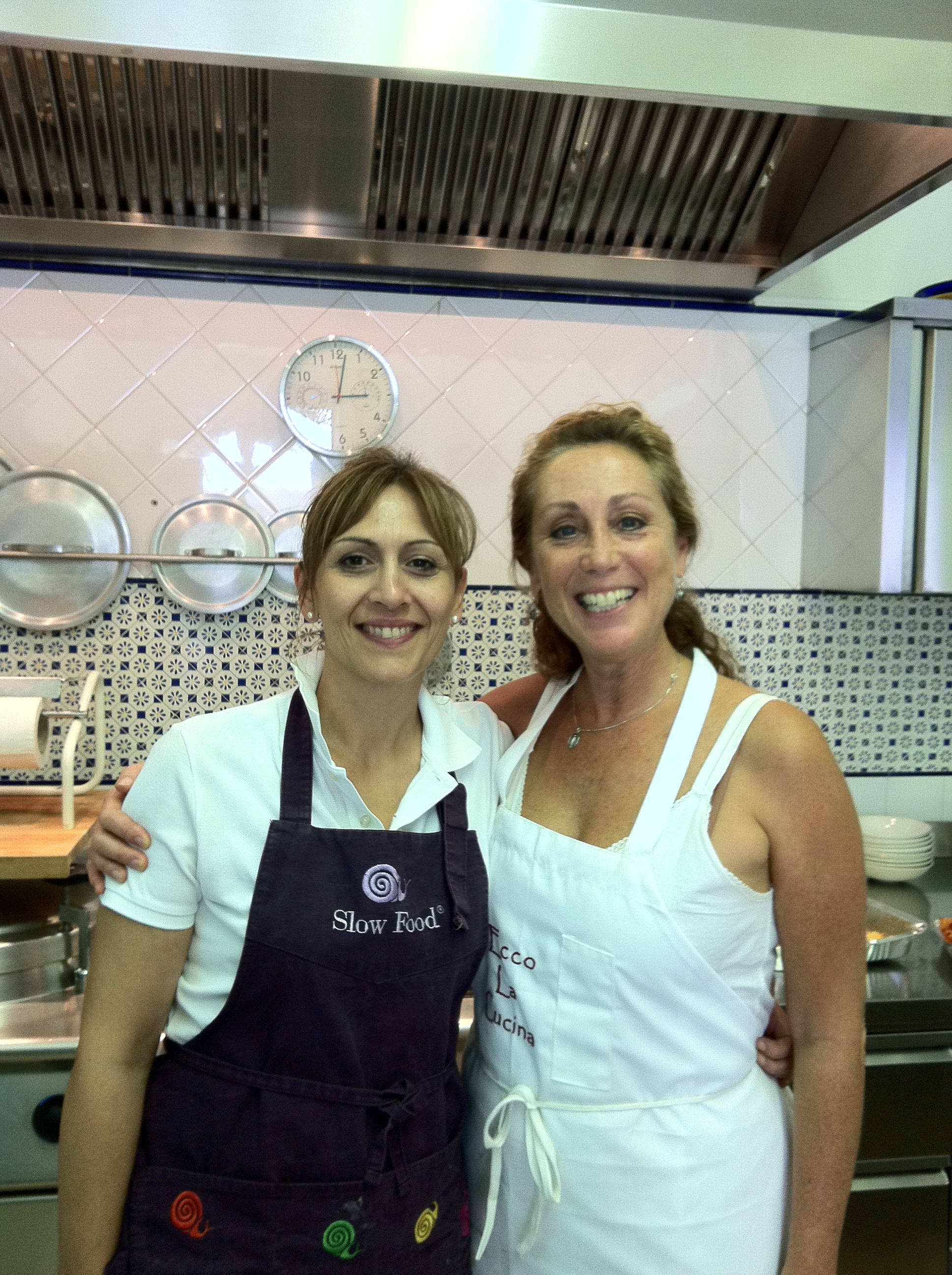
I have made some wonderful friends down there.  They are open and fun and love a lively discussion about food.  One of the highlights of our trip is always a cooking class with my friend Concetta where we learn the myriad ways of making parmigiana di melanzane – eggplant parmigiana.concetta e gina

A word about the name: while it sounds like a referral to the parmigiano cheese that is put in the dish, many incorrectly assume that it’s a dish originating in the city of Parma, in the northern region of Emilia Romagna.  Actually,the origins of parmigiana are neither related to the city of Parma nor to the fact that you might use Parmigiano Reggiano cheese as an ingredient. As my good friend and master chef Odette Fada points out:

“The confusion has been generated by the name. Parmigiana in this context, doesn’t come from Parma or Parmigiano, it comes from the Sicilian language: palmigiana or palmisciana. Sicily was the region where the eggplant first arrived in Italy and from there spread to the entire Peninsula. Parmigiana most likely was born in Sicily, where palmigiana or palmisciana mean “shutters”: “the louvered panes of shutters or palm-thatched or tile roofs that the layered eggplant slices are meant to resemble”. Sicilians have a peculiar way of pronouncing the “r”, which can be confused with “l” and vice versa.  And the “chee”
sound frequently becomes a “gee” in southern Italy.  For this reason the palmisciana became parmigiana in Italian. This hypothesis is shared by the majority of food writers, either Italian as Eugenio Medagliani or not, as the American Mary Taylor Simeti.”

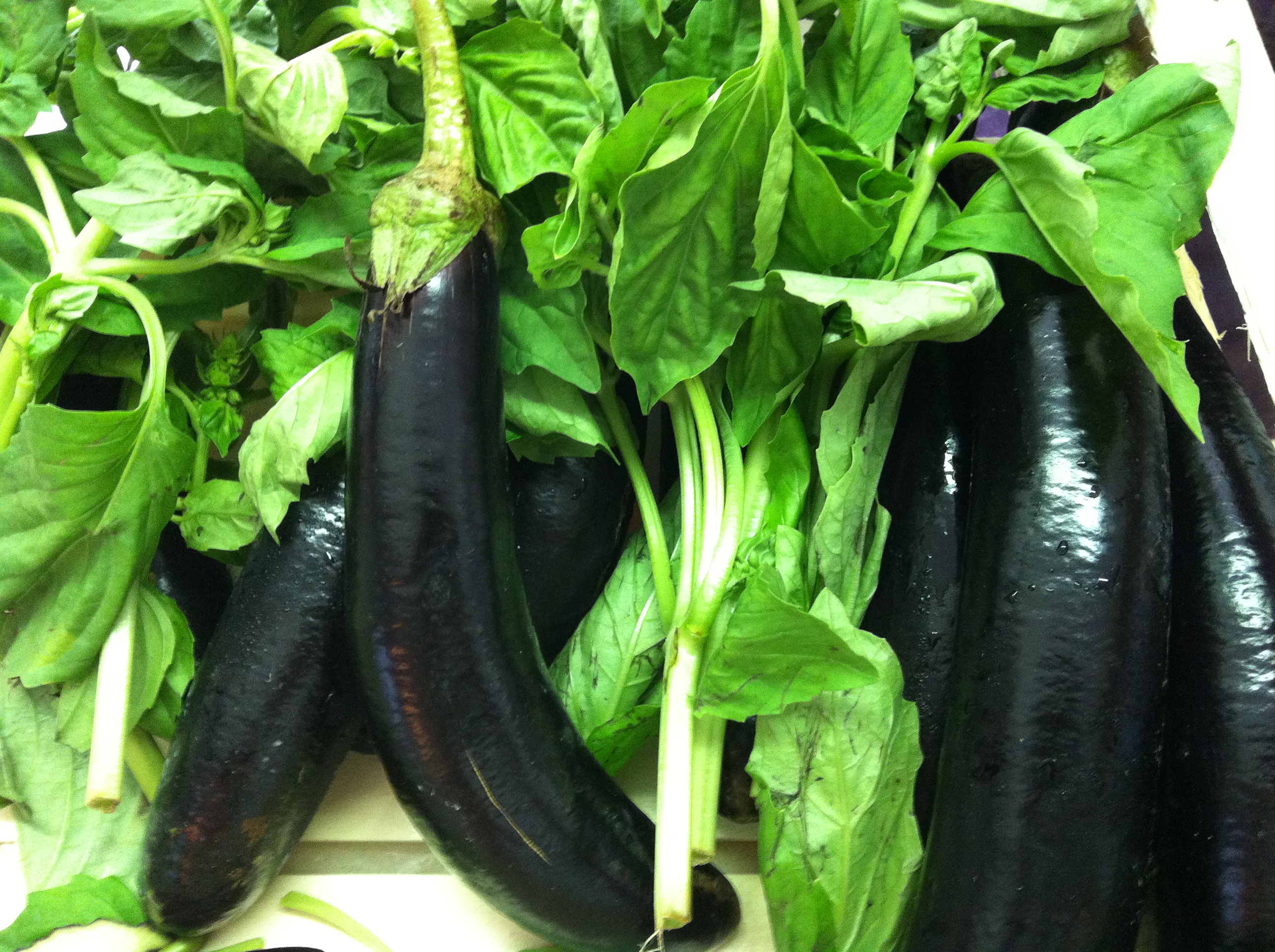
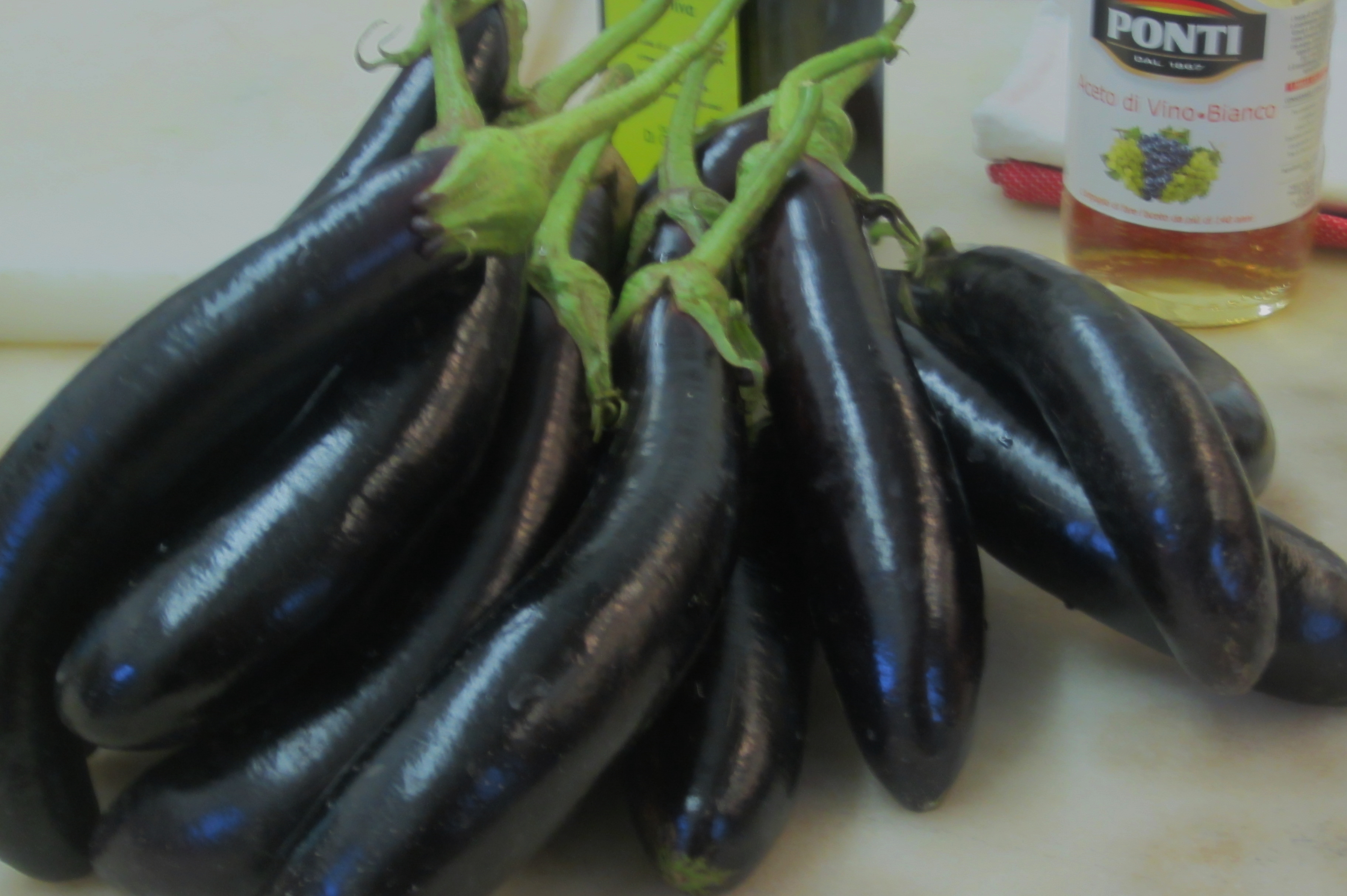
eggplant and basilEggplant is a summer vegetable and is most commonly used in southern Italy during the hot summer months, almost replacing meat in Campania.  There are several different kinds grown, and I’ve been astounded at the variety found in the markets and grocers during august and september, but it seems the favorite in Campania is the long, slender dark purple kind that have few seeds.  These are the best to cook with if you can find them.slender eggplants

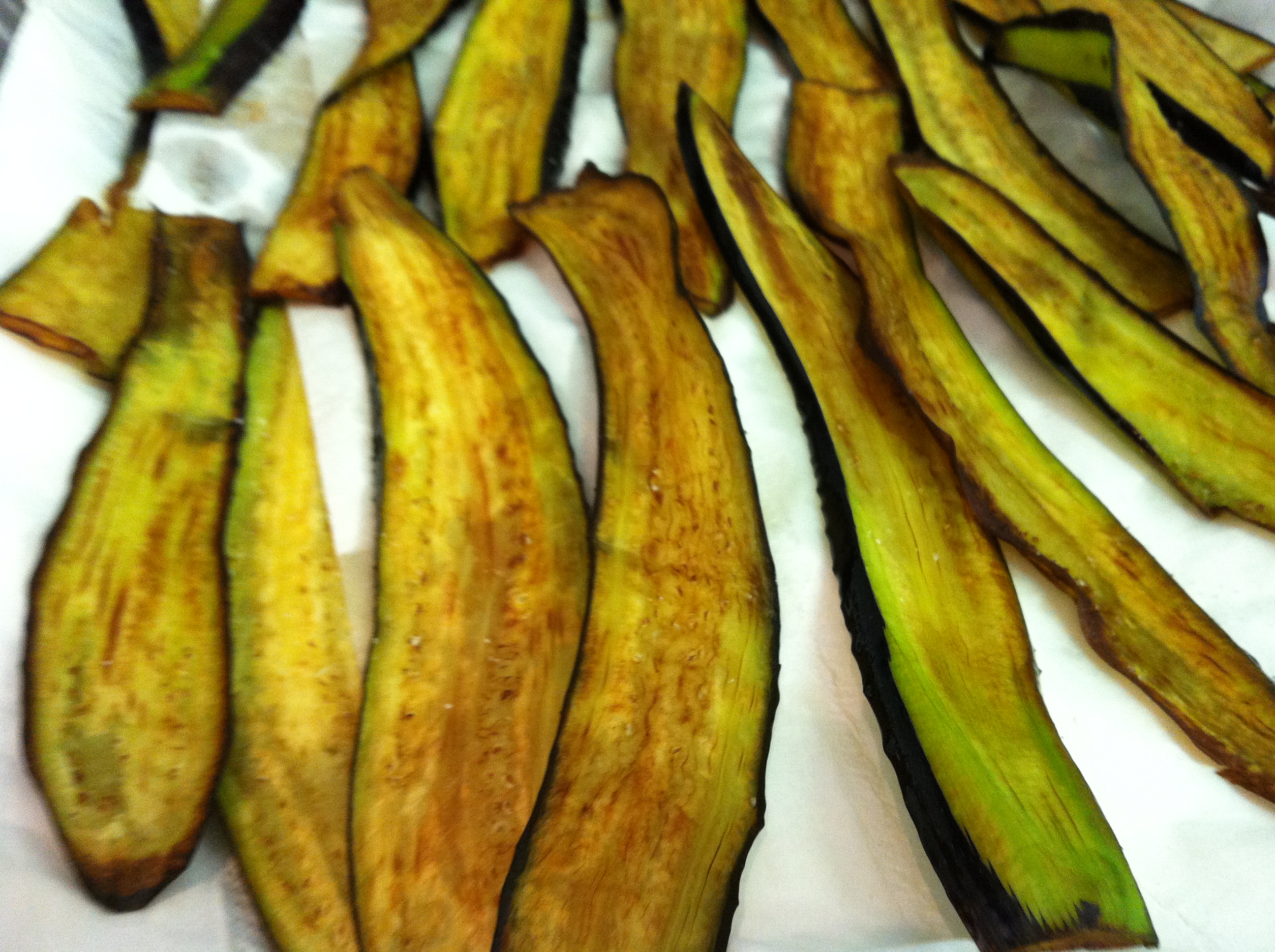
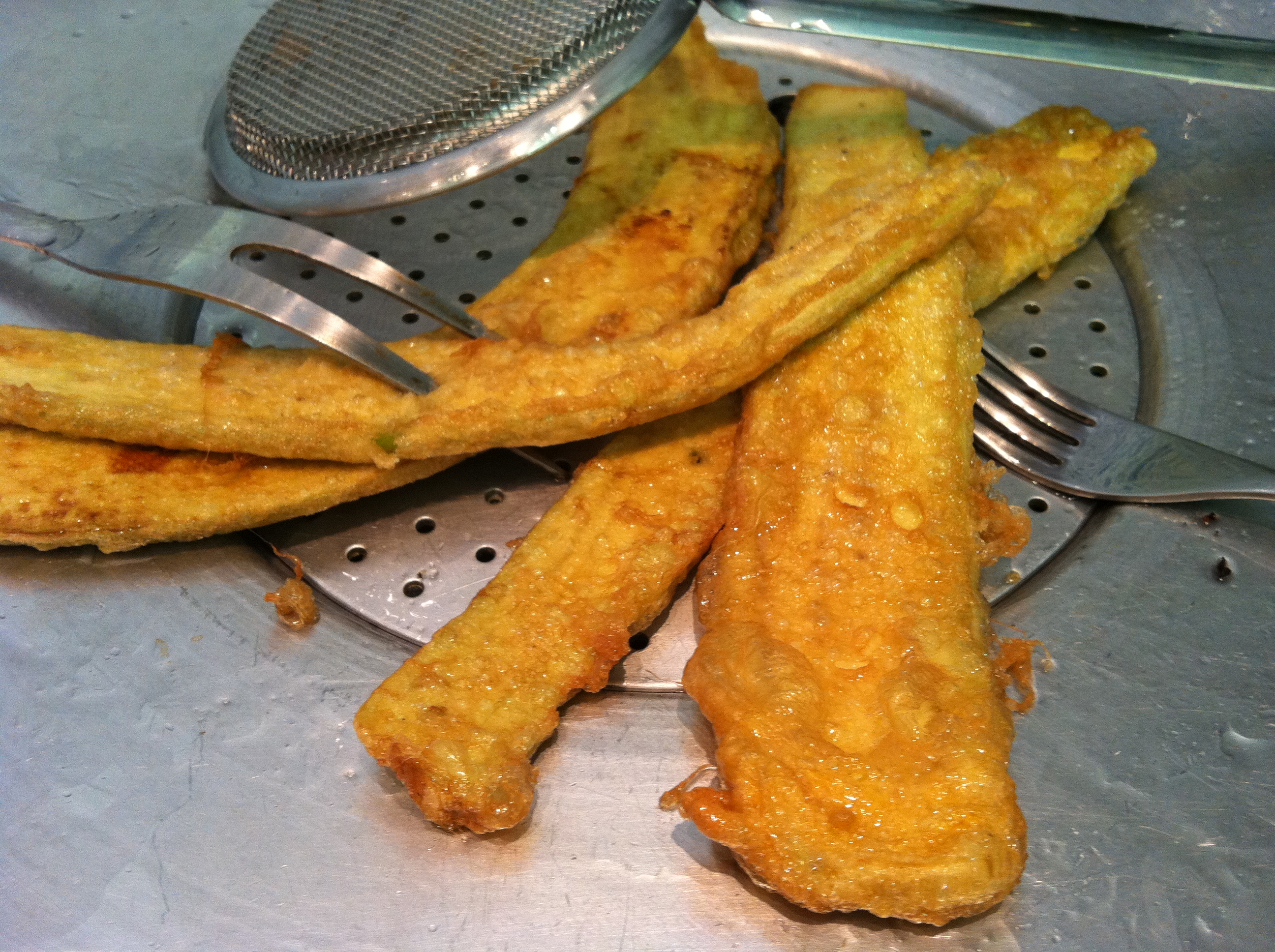
There is nothing an Italian likes discussing more than food and how to make it, and the proper way to make parmigiana di melanzane, like any good food discussion in Italy, frequently becomes so heated you expect at any moment it will come to blows, dissolving into a real food fight! The biggest bone of contention is whether the eggplant should be dipped in egg and bread crumb, or just fried straight, and family’s split down the middle and take sides over the issue!fried eggplantsfried w egg

Salting is also apparently an option. Some do, some don’t. The point of salting the eggplant is this: an eggplant is made up of tiny cells or chambers, like a sponge. When you salt it, the chambers collapse, releasing water; thus the chambers are prevented from filling again with oil when frying.  Some cooks in Campania say that if you get the long, skinny and firm variety, it’s not necessary to salt it. Just slice them thin and proceed with the frying stage.  If you are using the big, spongy eggplants, you’ll want to slice them and then salt them well. Put them in a colander in the sink with a heavy weight on top for at least 5 hours if not overnight. Once they’ve given up their water, rinse the salt off well and dry them on paper towels. Then you can continue with frying.making eggplant parmclass at concettas

A third option is to blanch the slices in salted water. While this may be a healthier alternative, boiling anything is never as delicious as frying it. End of discussion.

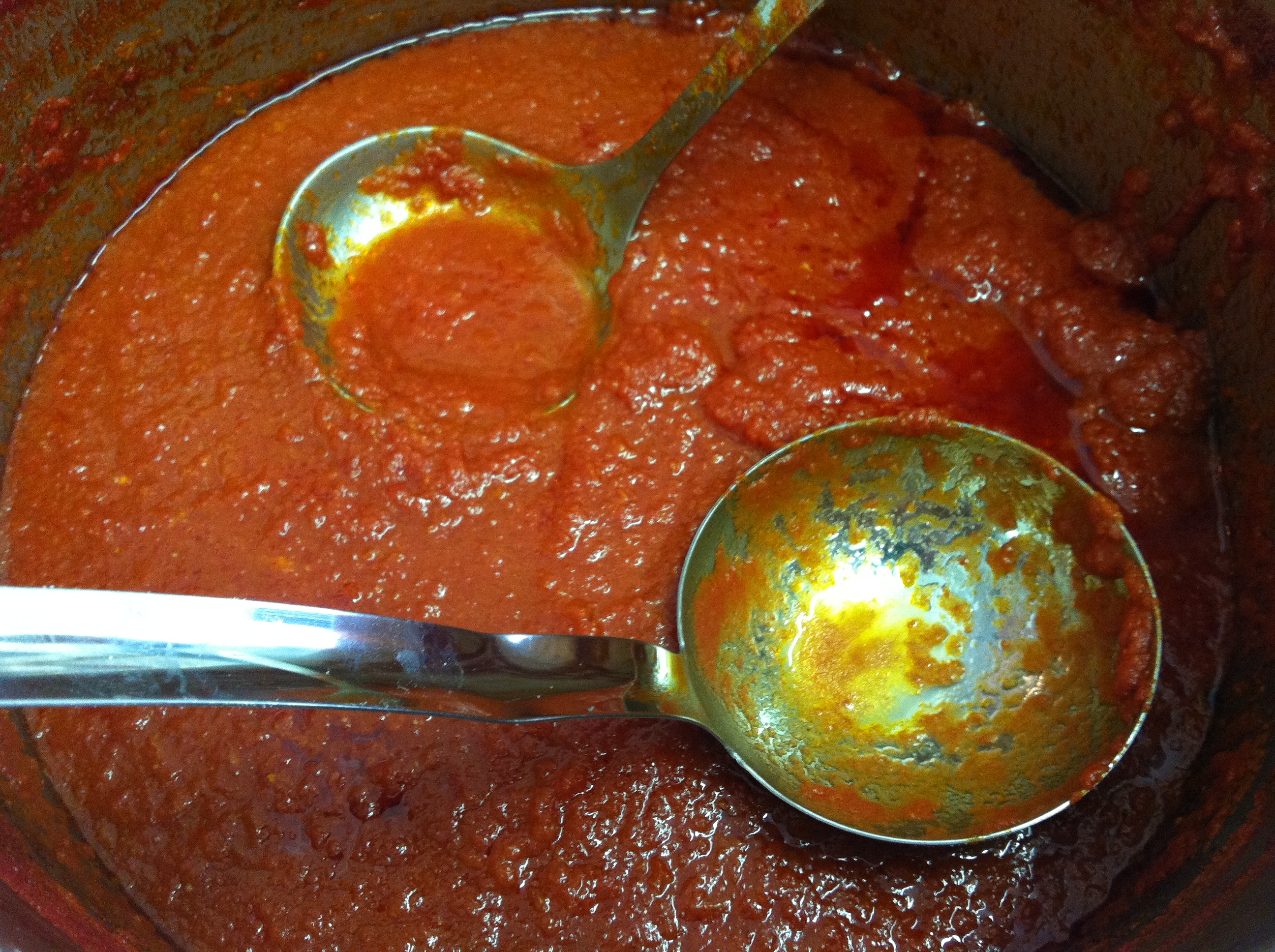
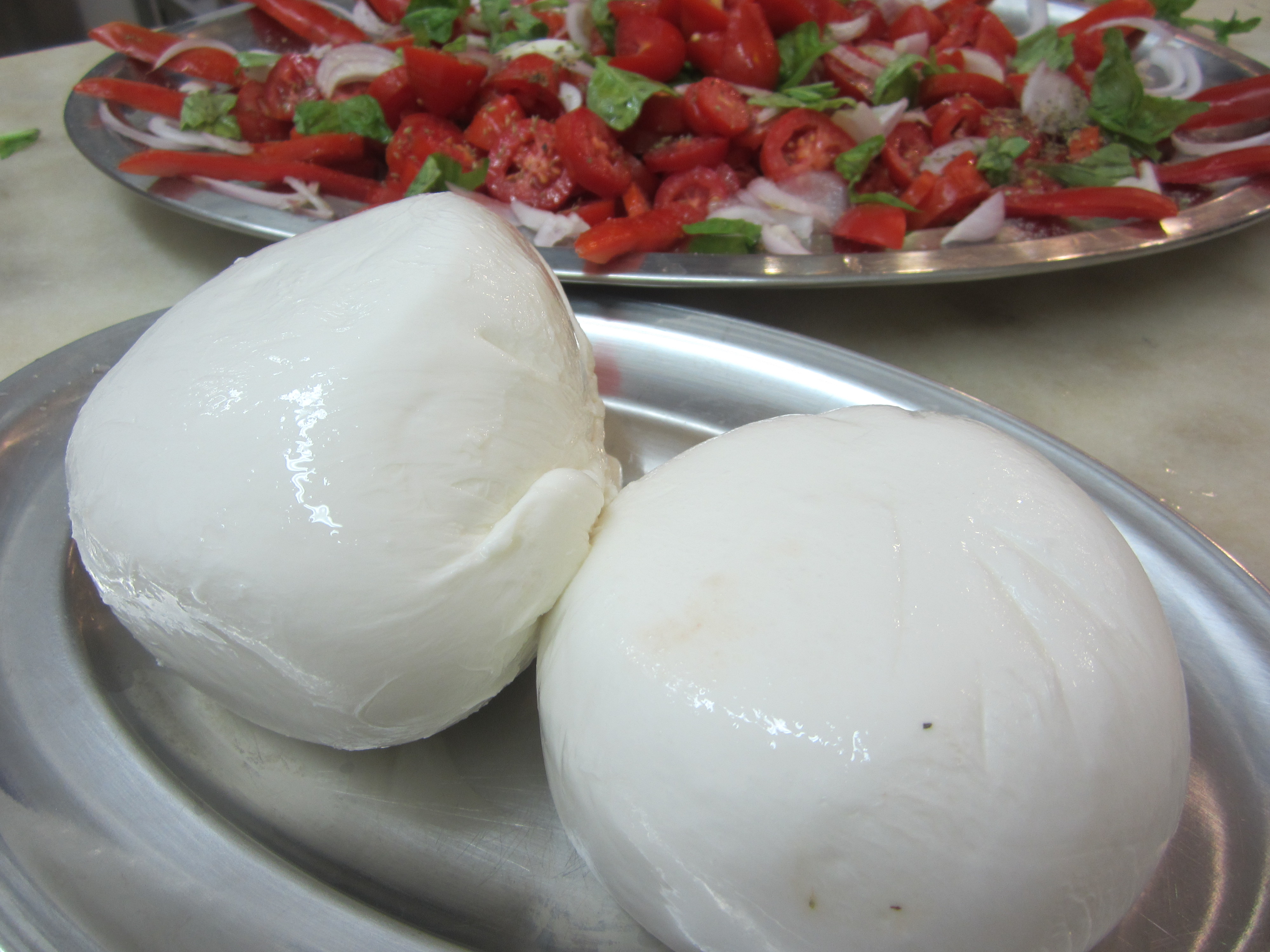
Everyone does agree that the only five ingredients are: eggplant slices, a simple red sauce, mozzarella, parmigiano or grana padano, and basil leaves.simple red saucemozzarella

Concetta likes the simple method:  slice the eggplant and then fry it immediately.  Her mother in law insists that the eggplant should be dipped in egg and flour before frying, and Concetta’s husband agrees.  Luckily for us, Concetta is also a scientist and the proposition that we make both kinds and taste for ourselves which we was best was met with enthusiasm on her part.eggplant parmigiana

Once the two parmigianas were made and baked, we sat down to eat.  With slices of each in front of us, we tasted and discussed which we liked best.  The lighter of the two was the one without all the egg and flour and was voted the best; we all raised a toast to the cooks and to the lesson and continued on with our lunch.

After a little while, I turned from my students to listen to the discussion my Italian friends were having at the other end of the table.  They were still talking about the eggplant parmigiana and which method was best.  Food discussions in Italy have no beginnings and no ends; they’re continuations, just like life.

 Parmigiana di Melanzane – Eggplant Parmigian

4 eggplants, peeled and sliced thin
Peanut oil for frying
3 eggs, beaten
2 cups flour
Simple tomato sauce
Fresh basil leaves
1-2 lbs whole milk mozzarella, sliced
2 cups Parmigiano

To make the red sauce, heat good quality olive   oil in a pot and add tomato sauce and salt.  Allow it to simmer 30 minutes.
Heat the peanut oil to 375 degrees.  Either fry the eggplant straight out, or dip each slice into the beaten eggs and then dredge in flour and fry each slice until golden brown. Drain on paper towels. Prepare a large baking dish with a drizzle of olive oil and a light coating of tomato sauce. Place a layer of fried eggplant in the pan, pressing down firmly. Add a light coat of tomato sauce, some whole basil leaves and a layer of mozzarella and a sprinkle of Parmigiano.  After each layer, press the mass down tightly.  Continue to layer in this way, making sure that you consistently press the eggplant slices firmly into the pan. In this way, once it’s baked you will be able to slice it and it will maintain its shape.


Filed Under: Blog Categories, Campania, Frittura, seasonal vegetables Tagged With: Campania cuisine, eggplant parmigiana, parmigiana di melanzane

October 22, 2014 by Gina Stipo Leave a Comment

October is Pizza Month!!

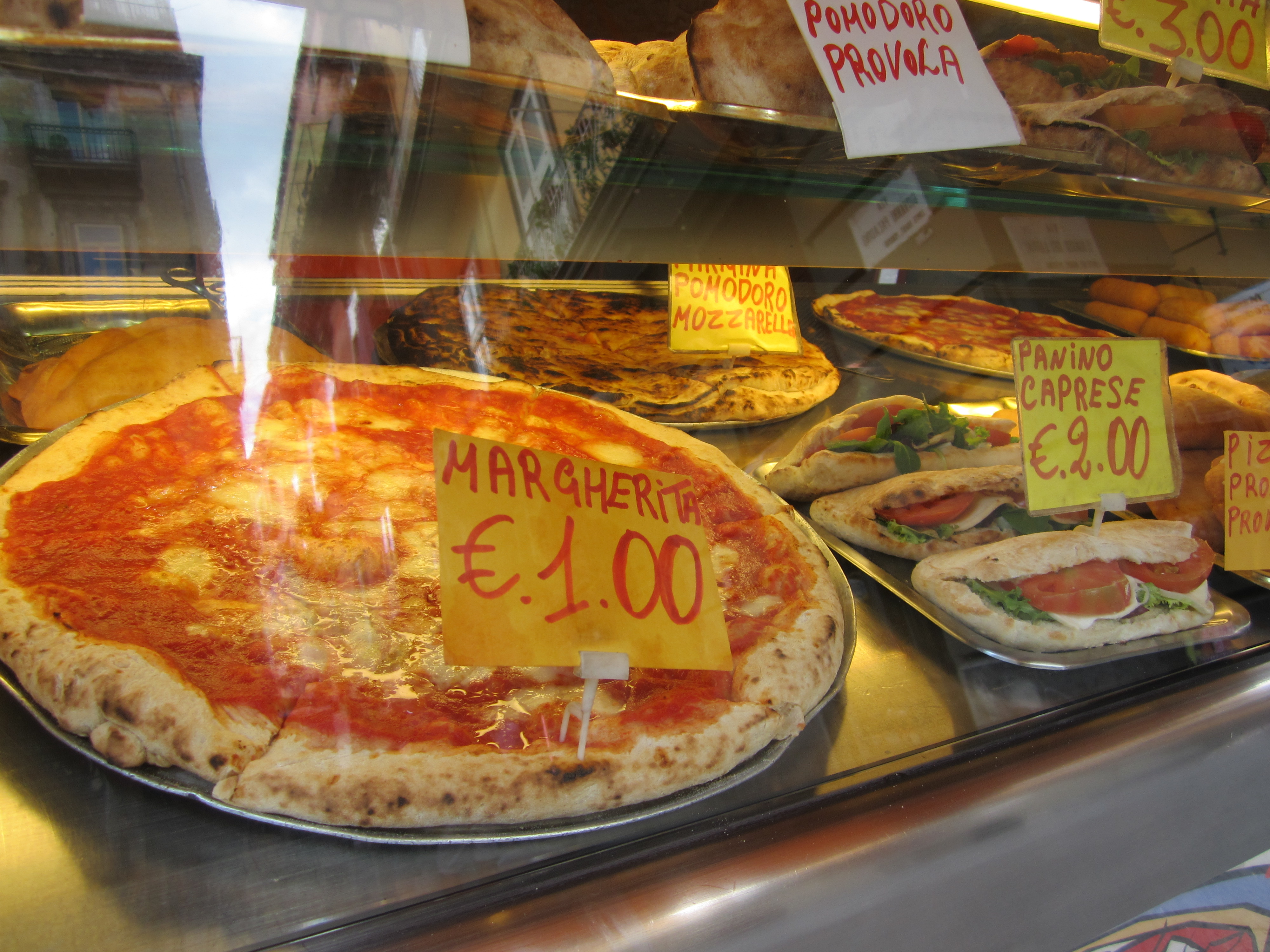
pizza margherita October is Pizza Month, everyone’s favorite Italian food! Originally from Naples, where it was street food, pizza was brought to the American shores by the hordes of Napolitani that immigrated in the late 18-early 19th century.  It didn’t spread to the rest of Italy until after WWII, but its cheesy goodness has found a home throughout the world.pizza in naples

 
In my family, every Friday night was pizza night. Mom made the dough in the afternoon and allowed it to rise, then punched it out onto a baking sheet, covered it with tomato sauce and Polly-O whole milk mozzarella, a sprinkle of basil and oregano and a drizzle of olive oil. Served with lentil soup, that was Friday night supper for years and years. And the leftover pizza sat on the kitchen counter all night and we ate it for breakfast Saturday morning! Simple and delicious.
Pizza can get really complicated outside Naples, but the traditional pizza is still the most honored in that food centric place: marinara with tomato sauce, oregano and garlic slivers; and margherita with tomato, mozzarella and basil leaves.
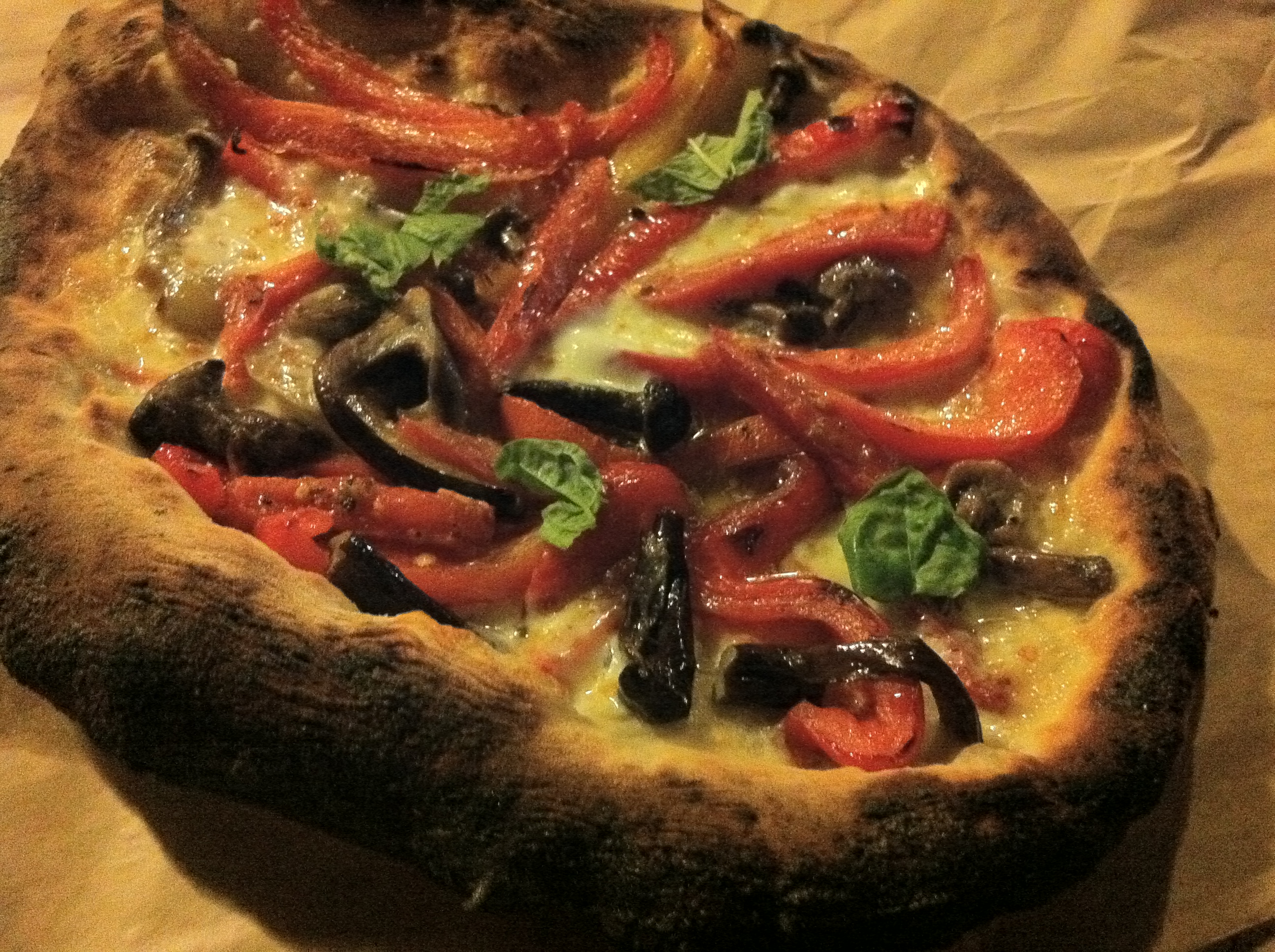
Pizza in Tuscany tends to be thin and crunchy, almost cracker-like. This is caused from rolling the dough flat with a rolling pin or a rolling machine, thus destroying all the bubbles formed by the yeast. In Naples and Rome, they punch the dough out or gently stretch it to form it or put it in the pan. This way the bubbles remain and when the pizza hits the hot oven, they expand and give a lovely chewy crust.pizza
In Siena we have ciaccino, a very thin, double-crusted pizza, stuffed with a single slice of ham and a sprinkling of cheese.
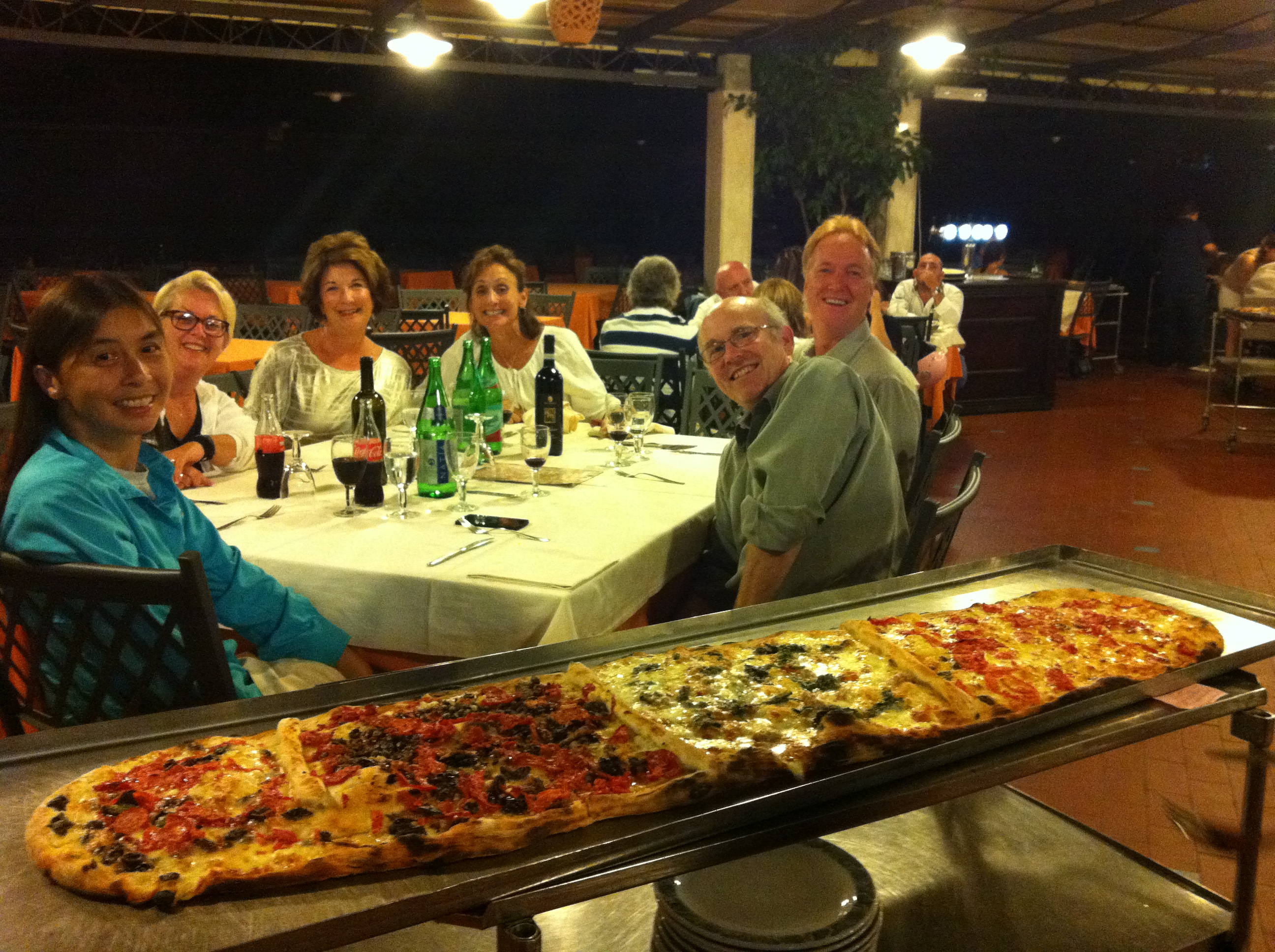
When we were in Campania this past September with our culinary group, we ate pizza in two historic locations: Pizzeria Brandi in Naples, which invented the pizza Margherita in 1878 for a visit by the queen of Italy; and Pizza al Metro in Vico Equense, which invented pizza by the meter, or yard. Tell them whatever toppings you want, they make a pizza 3-6 feet long and put the toppings on it at intervals. Everyone gets the pizza they want and it’s served on a long trolley set by the table!pizza by the yard
The great local red wine goes perfectly with pizza. Try an aglianico, a primitivo or a simple Chianti. Buon Appetito!


Filed Under: Blog Categories, Campania, cheese Tagged With: ciaccino, pizza, pizza margherita, pizza napolitano

August 13, 2013 by Gina Stipo Leave a Comment

Simplicity of Summer al Fresco dining

summer tomato salad

It was almost 100 degrees today.  When it gets this hot in the US, Americans disappear into their air conditioned houses and cars, but Italians come out to live on the street, in their gardens, on their terraces, under their neighbors’ noses. All the windows are open to the warm night and the still air is filled with voices of the neighborhood chatting about the days’ events, silverware clinking on plates as the evening meal is shared al fresco. Normally private conversations are open to everyone. Nothing is concealed in the still heat. Clothes come off, people come out and the entire town becomes your living room.

The simplest of meals is served. Tomatoes tossed with fresh basil, olive oil and salt. Sliced salami and cheese. Cold tuna and white beans, maybe a slice of frittata from lunch. Glasses of chilled white wine. Nothing that requires turning on the stove or oven. It’s too hot for heat.

An ice cream is suggested and we walk to the crowded bar to see what might be left in the freezer case.

Summer salad of Tomatoes with Basil

Cut up 3 or 4 very ripe large tomatoes, tear or chiffonade several basil leaves, sprinkle with sea salt and drizzle with great extra virgin olive oil.  You can toss in a whole garlic clove and let it flavor the dish for a few minutes if you like.  Be sure to serve with some good bread for sopping up the juices.

Tuna and Cannellini Bean salad

Open a can or jar of the best quality tuna you can find and a can of cannellini or white beans.  Thinly slice a red onion.  Toss the whole thing with some great extra virgin olive oil and sea salt, maybe a few leaves of parsley, and serve.

Filed Under: Campania, seasonal vegetables, Tuscany Tagged With: al fresco dining, italian summer, summer salad, tuna bean salad

  • « Previous Page
  • 1
  • 2
  • 3
  • 4
  • 5
  • Next Page »

Recent Posts

  • Italian Cuisine in the World!
  • Warming Winter soups
  • Visit Emilia Romagna
  • Chestnuts for the Fall
  • Anchovies & colatura, ancient Italian umami

Categories

  • Abruzzo
  • aperitivo
  • Basilicata
  • Blog Categories
  • Campania
  • cheese
  • chianti classico
  • Cured meats
  • dessert
  • Emilia Romagna
  • festive Italian dishes
  • Frittura
  • Lazio
  • Louisville
  • meats
  • olives/olive oil
  • Pasta
  • Piedmont
  • Puglia
  • Sagre e Feste
  • Salt
  • seasonal & summer fruit
  • seasonal vegetables
  • Sicily
  • soups
  • Spices
  • supper club
  • Tuscany
  • Veneto
  • Wine
  • winter
Interested in seeing Italy with Chef Gina?
Then check out her schedule of immersion cooking classes and tours in Italy through Ecco La Cucina!

Handcrafted with on the Genesis Framework