attheitaliantable.com

  • attheitaliantable.com
  • Home
  • Recipes
  • Chef Gina Stipo
  • Join Gina & Mary in Italy!

February 13, 2015 by Gina Stipo Leave a Comment

Colatura – Italy’s Umami in a bottle

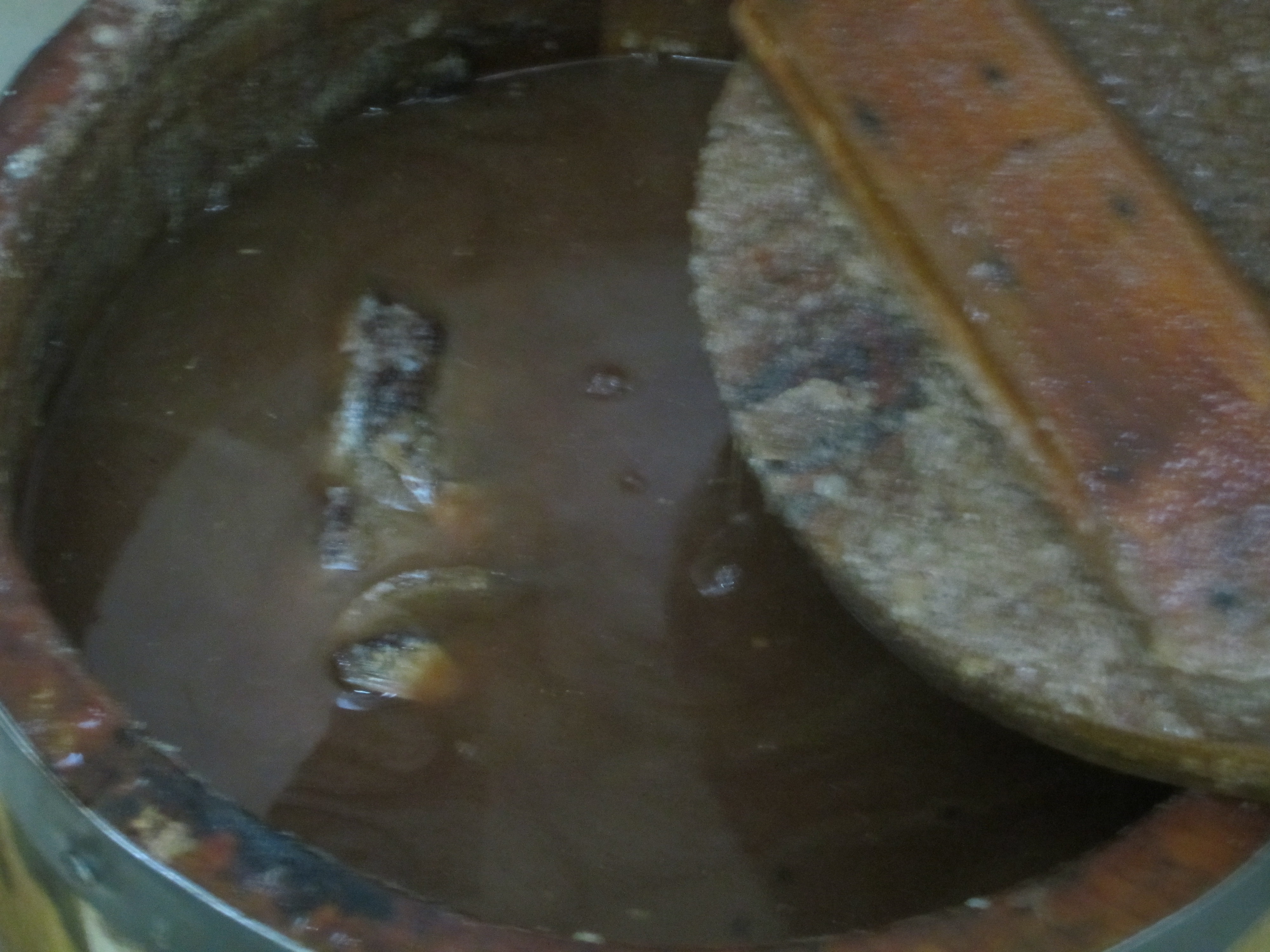
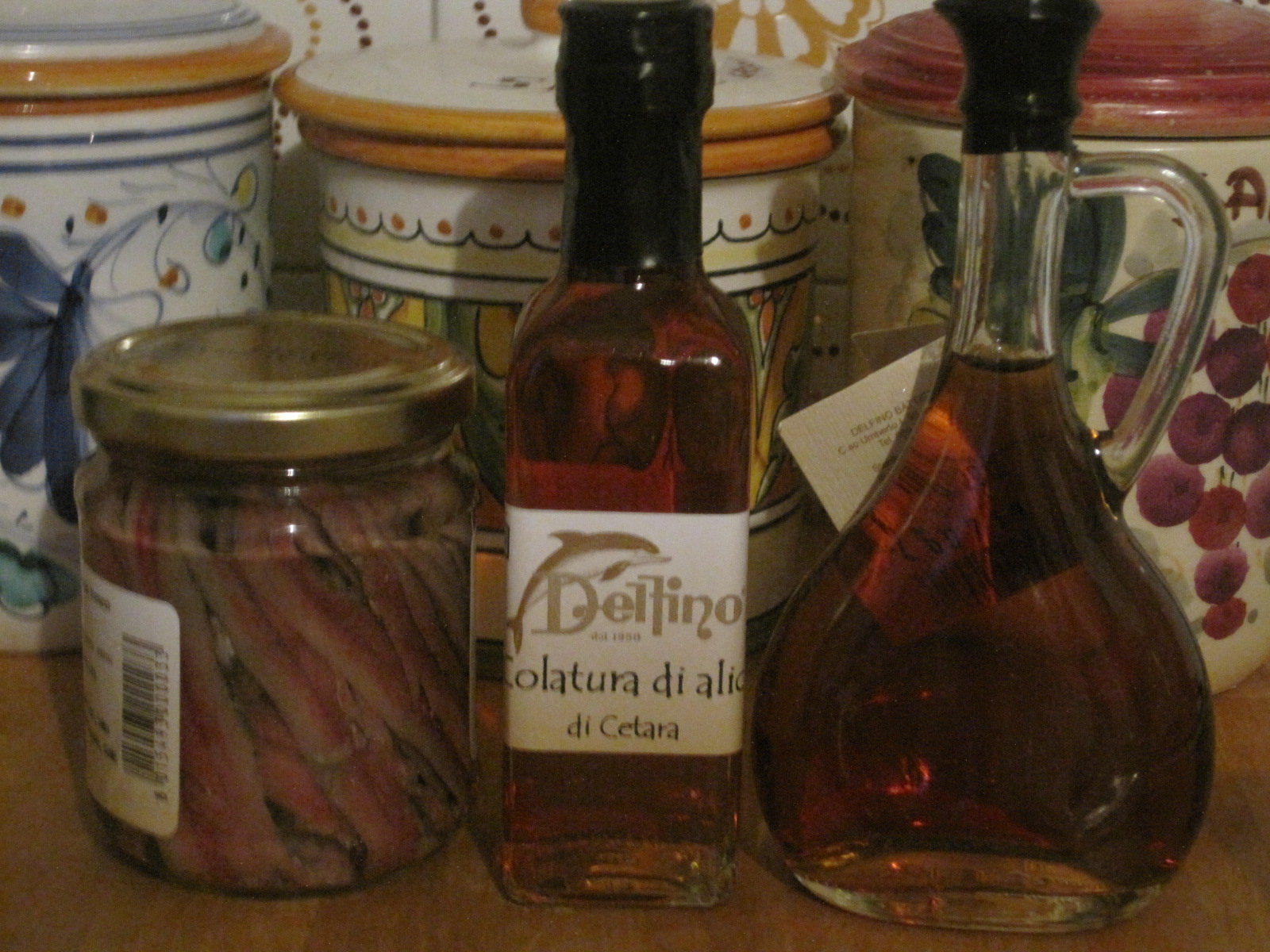
fish sauce of italyThe current issue of Saveur magazine has a short feature about the town of Cetara on the Amalfi coast and colatura, the special anchovy sauce they produce there.  An important ingredient in many of the dishes of the Amalfi coast and southern coastal towns of Italy, colatura is the juice drained off of anchovies that have been salted and aged in a wooden barrel for several months.  It is a concentrated fish sauce that both disgusts the nose and delights the palate and is undoubtably Italy’s best answer to the fifth taste, umami.barrel for colaturacolatura unfiltered
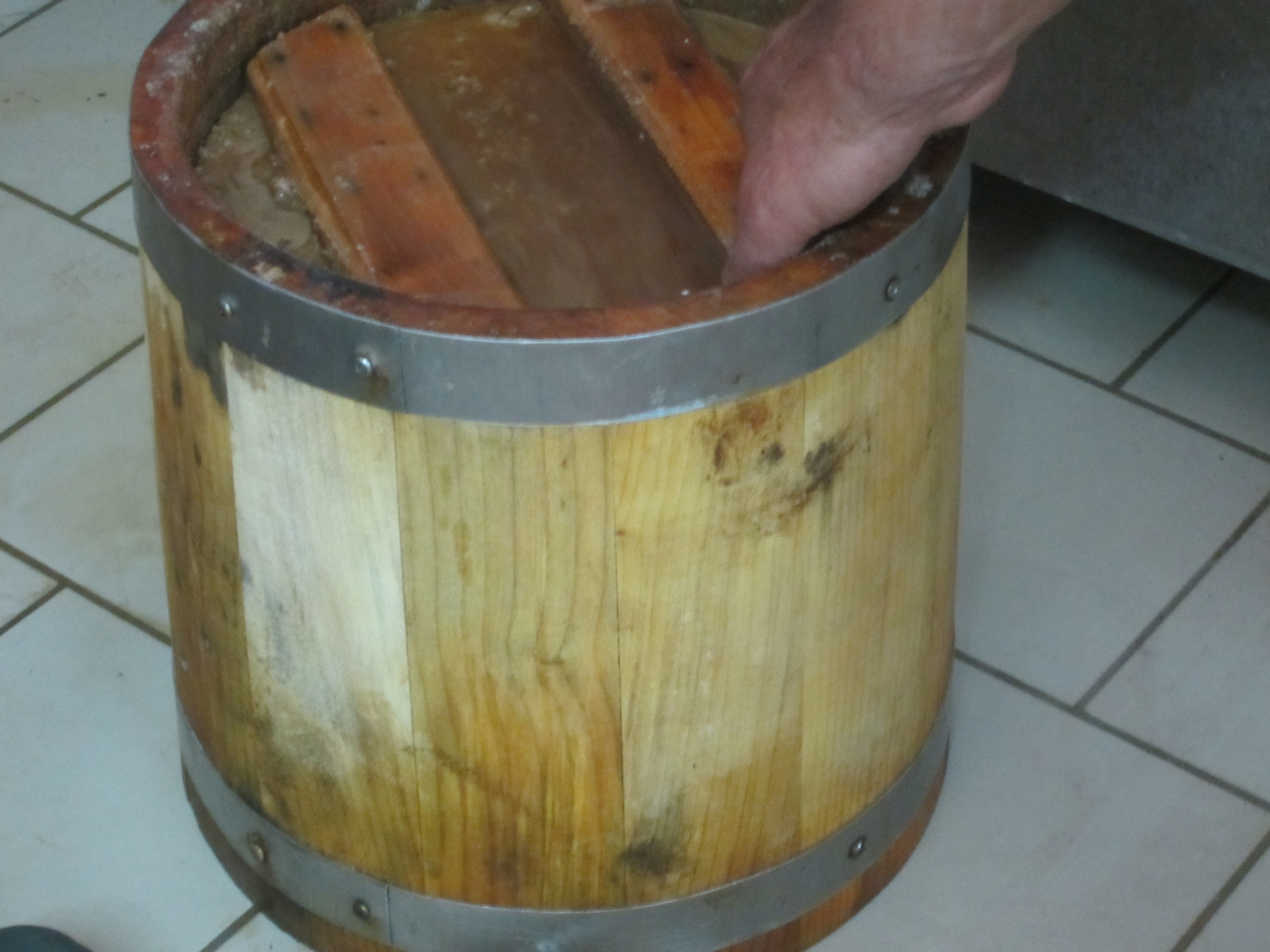
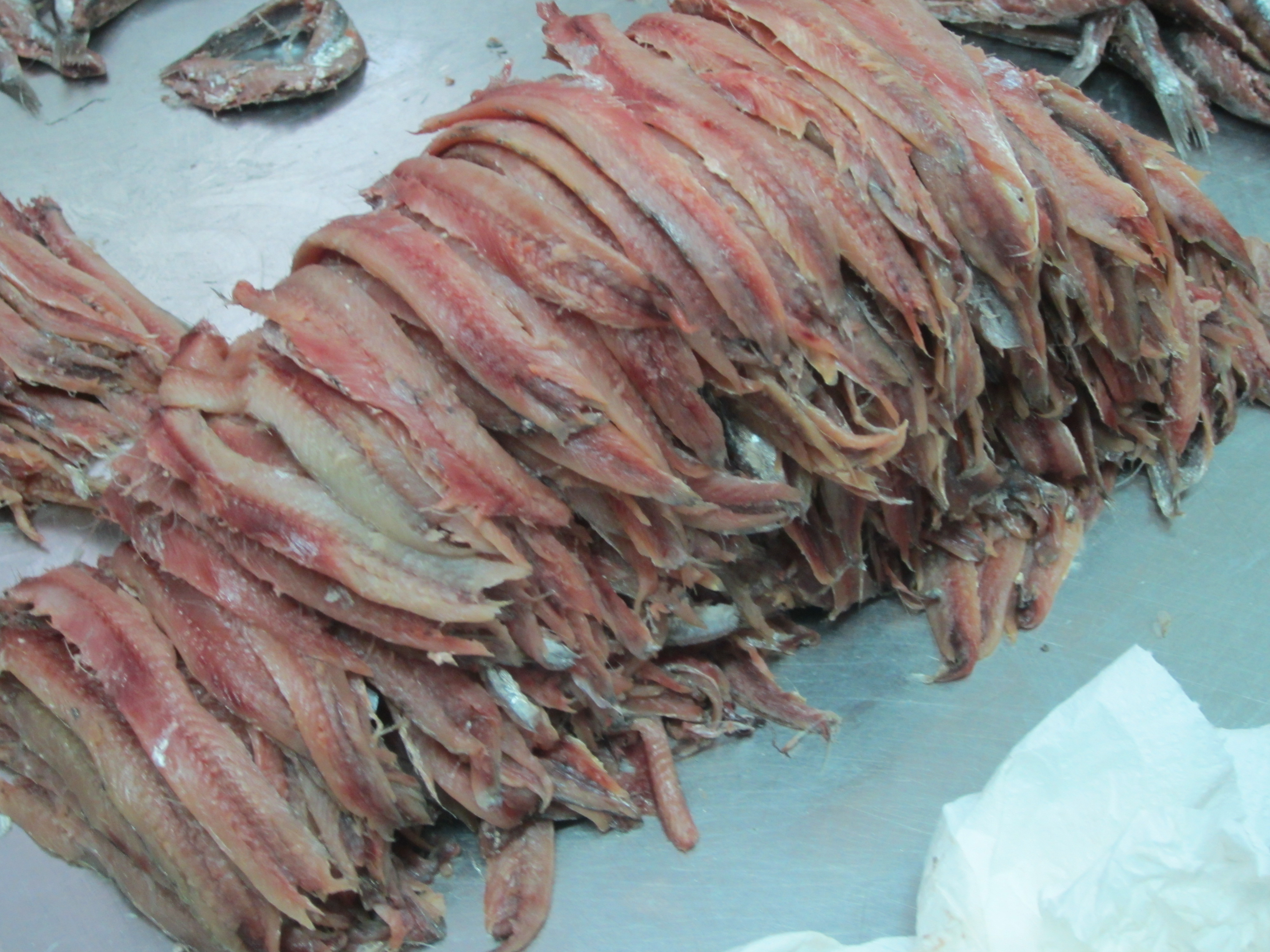
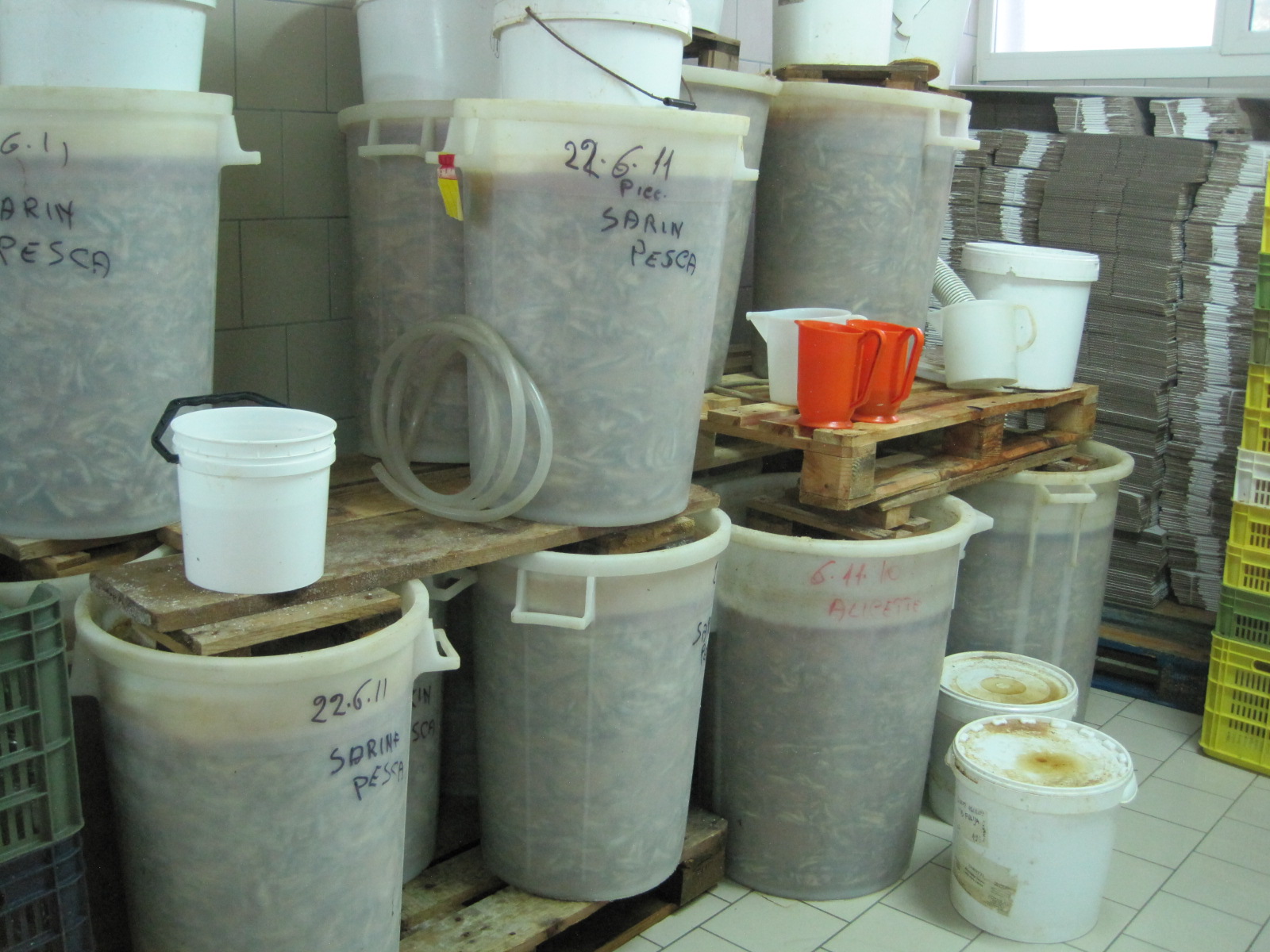
Based on an ancient Roman staple called garum, colatura has been made in this quaint fishing village for centuries.   Whenever we take groups to Naples and Campania, we always make a stop to see the women and men who labor at the task of cleaning the fish, salting them and then when they’ve been cured, removing the skin and bones and packing the anchovy filets in small jars. cleaning anchovy The process of cleaning, salting and packing in large plastic bins, or in the case of colatura, in small wooden barrels, takes place when the anchovies are running, generally from spring through early summer.  The process of cleaning and packing filets in jars is year-round.  Watching them work will make you grateful for whatever job you have!
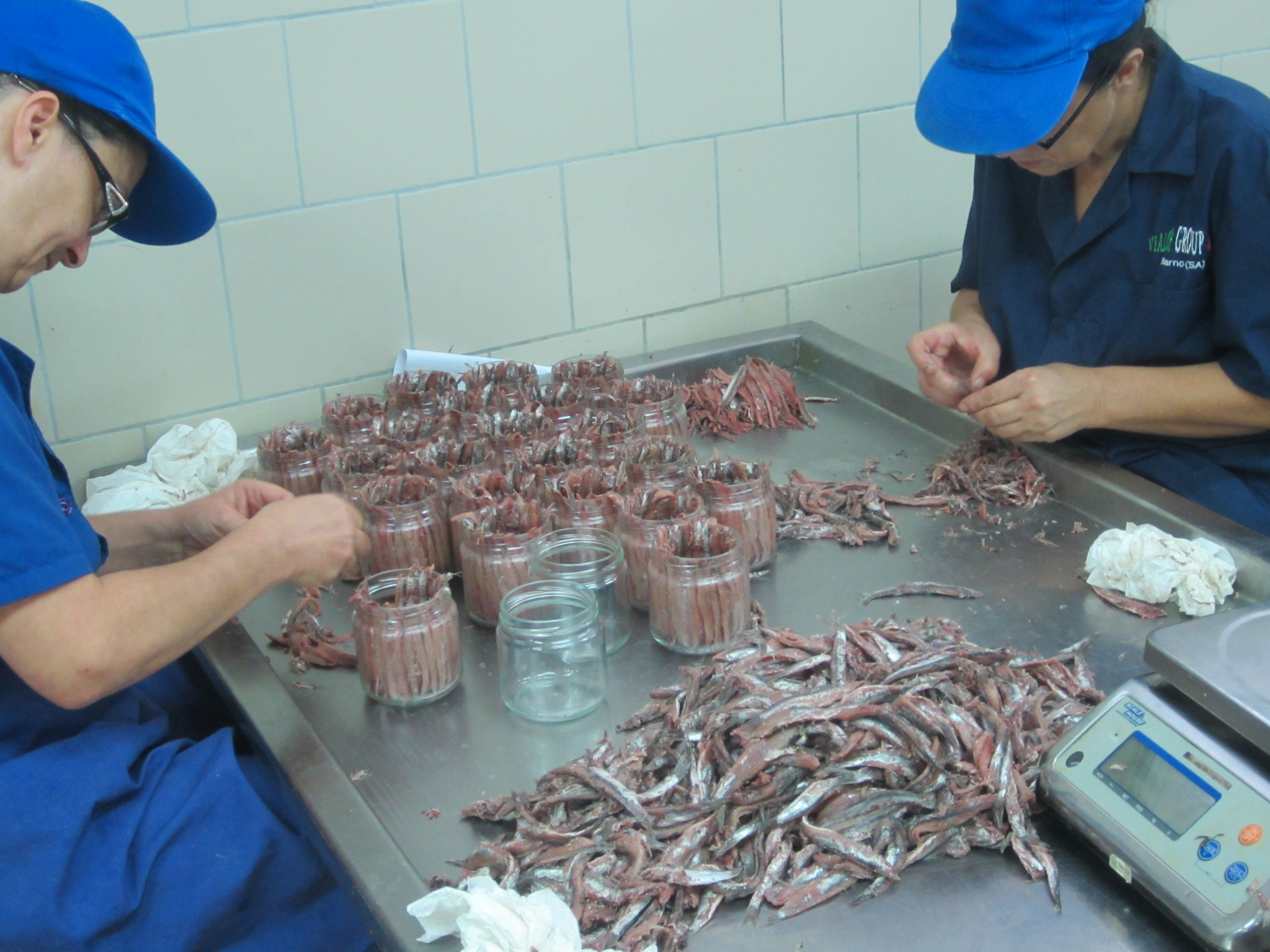
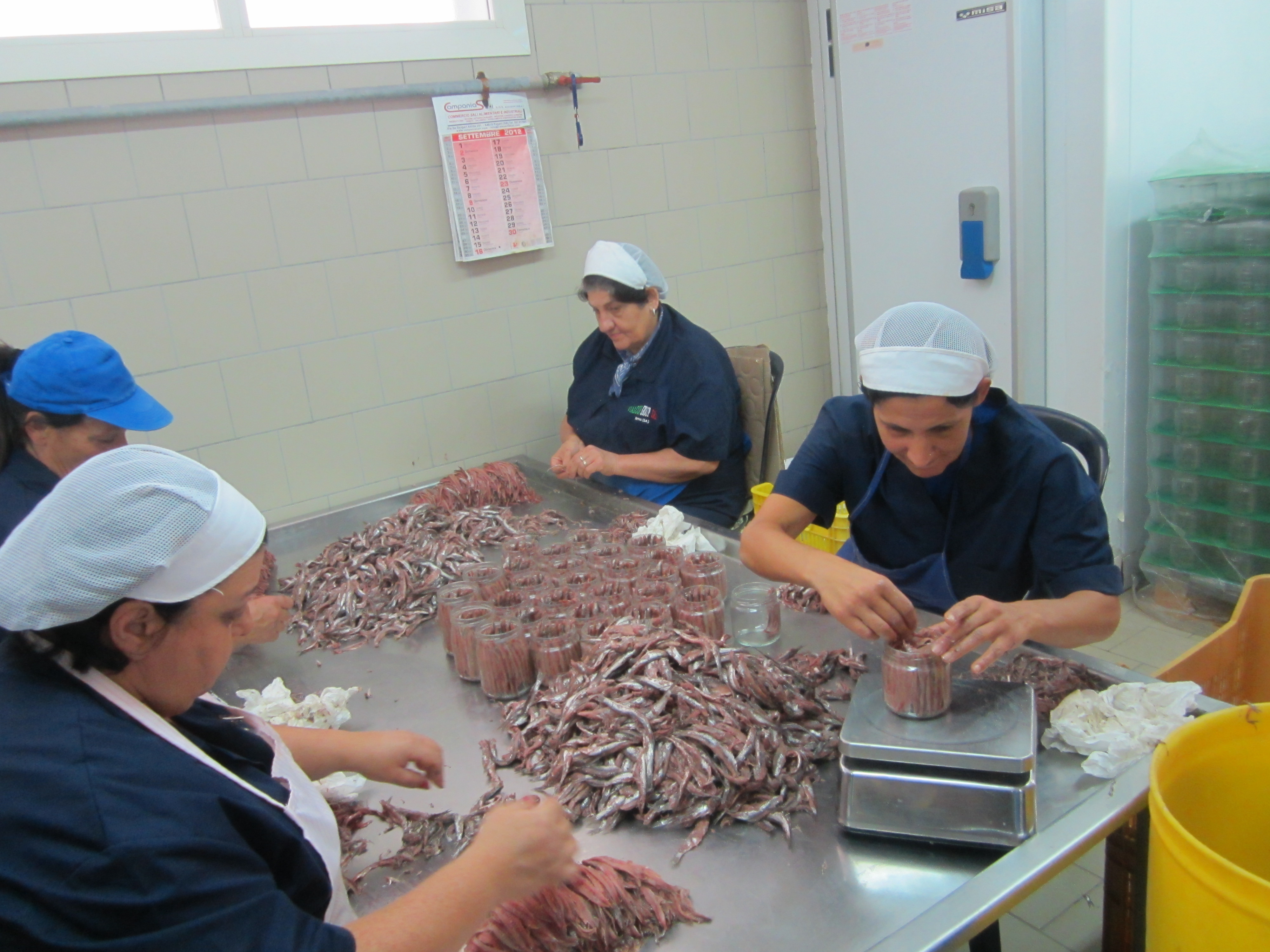
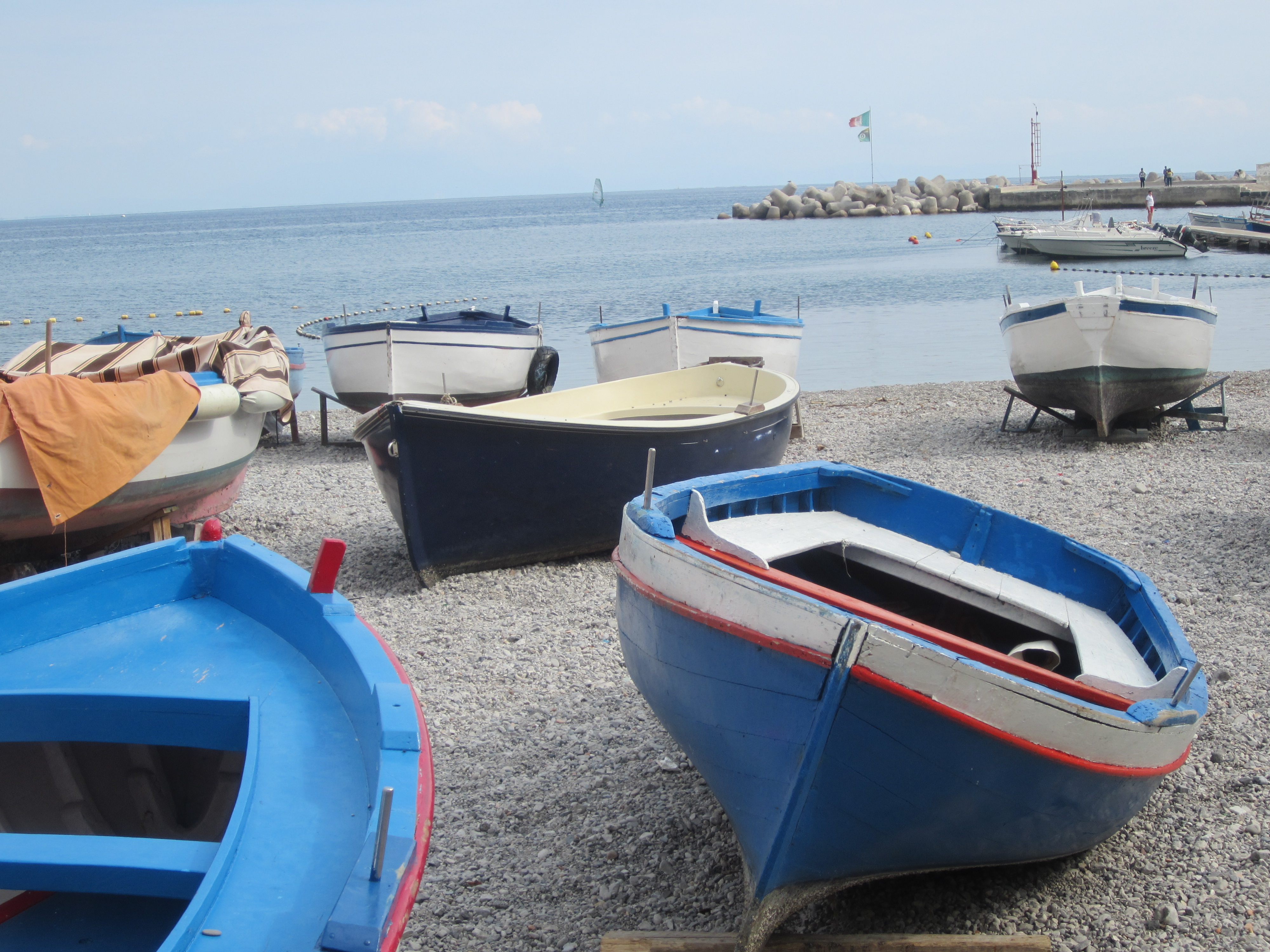
anchovy productionIt’s difficult to get in to see the process anymore due to hygiene controls in place, as with any food production facility.  But it’s Italy and if you know the right people long enough, it’s possible to get a pass to see the work done.barrels of anchoviessalted anchoviescetara fishing boatsCetara is a beautiful coastal town, with a small quaint beach on the Amalfi coast.  It’s quiet because all the buses and cars are frantic to get to better known towns and destinations, like Positano, Amalfi and Ravello.  I love stopping in Cetara long enough to lay on the beach and listen to the waves on the sides of the little fishing boats.cetara bridge
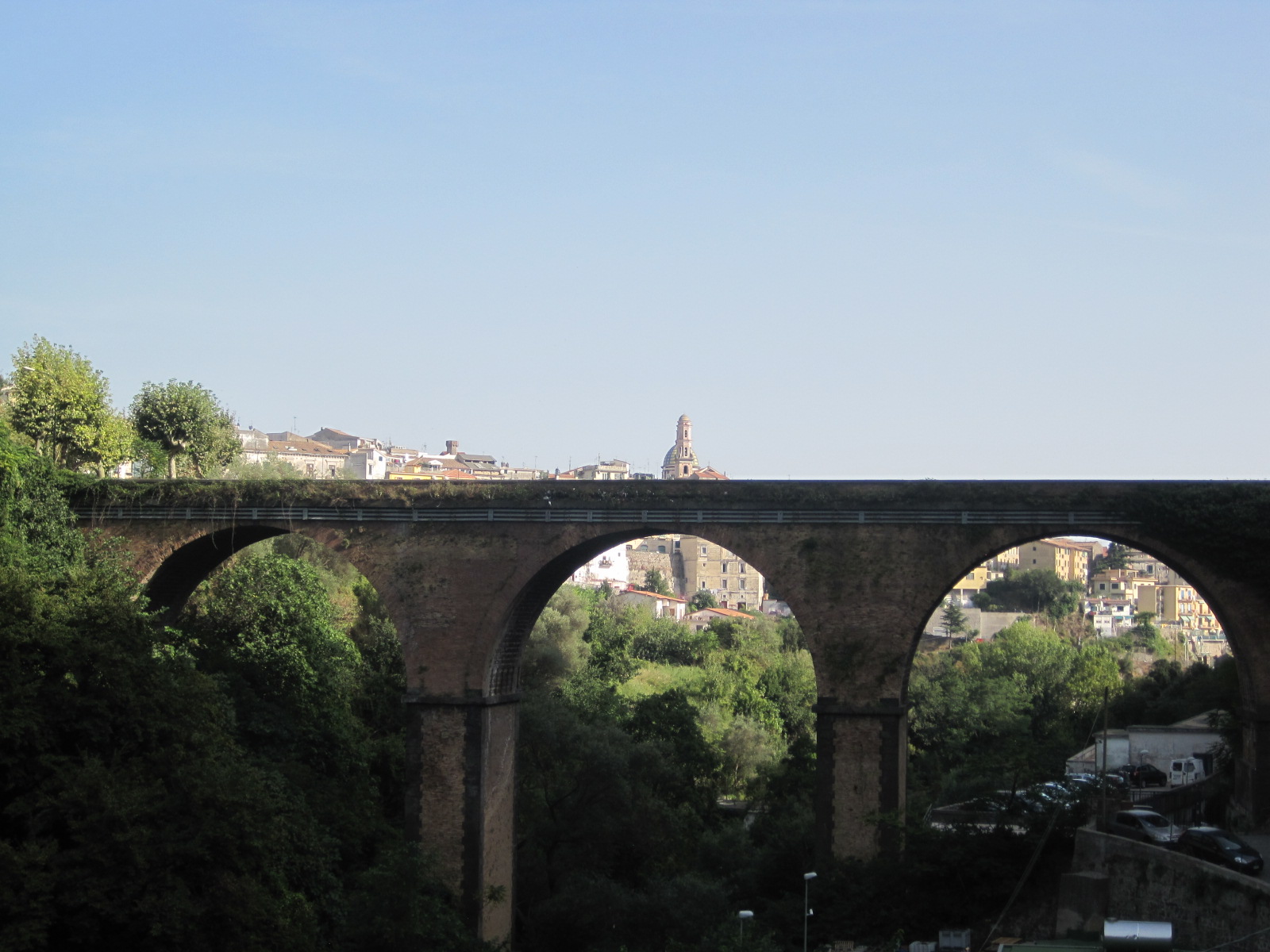
Most of the anchovy production is done in non-descript buildings under the bridge just after the town of Vietri sul Mare.
Filed Under: Blog Categories, Campania, Pasta, Salt Tagged With: anchovy sauce, cetara, colatura, Italian umami

February 5, 2015 by Gina Stipo Leave a Comment

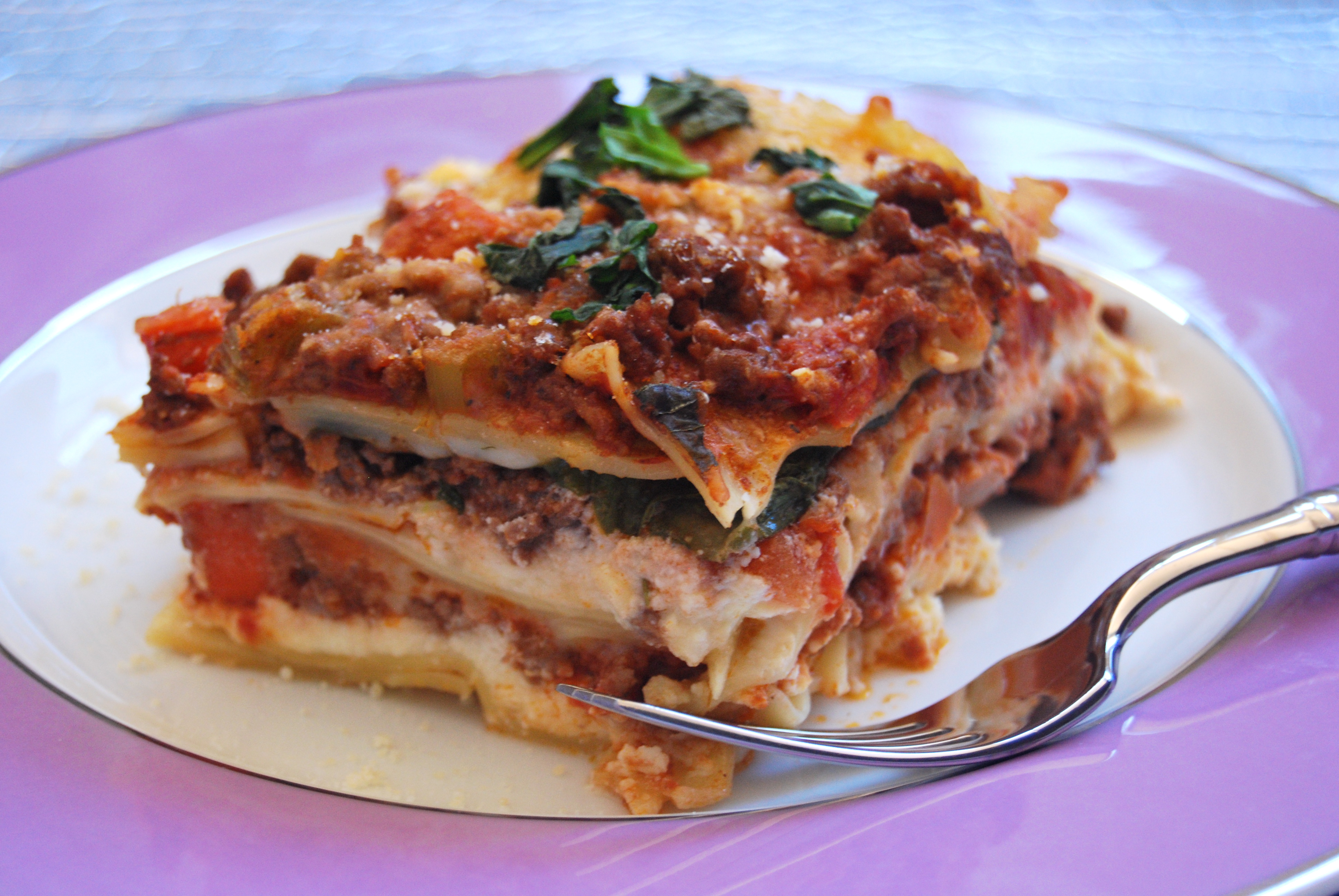
Lasagna di Carnevale – a rich treat to see you through Lent

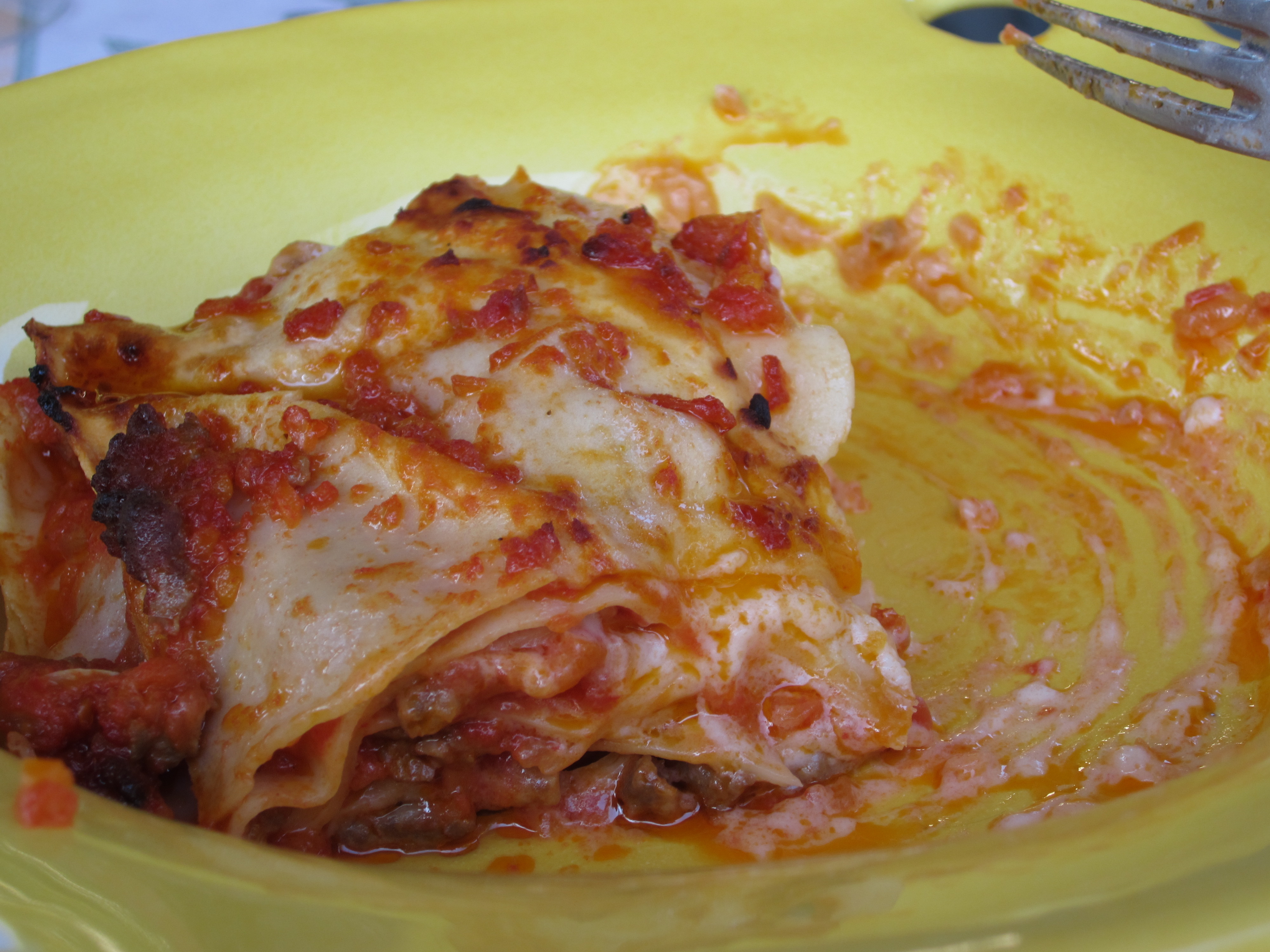
lasagna di carnevaleThere is a big celebration all over the world in the days leading up to Lent, in what are, or formally were, Catholic countries.  Called carnevale in Italy, the word literally meant “a removal of meat”, and began as an acknowledgment that they would soon be faced with 40 days of fasting before Easter.  It evolved into a decadent celebration of masked parties and rich foods, before Ash Wednesday reminds us all that “man thou art dust and unto dust thou shall return.”

Italy abounds with many special dishes that show up in celebration for any number of feast days and holy days, some more regional than others.  The fried and sugared pastry strips of the last blog, cenci, lattughe and chiacchiere, are found throughout all of Italy, the only thing changing is the name; but in Naples you also find struffoli, those little chickpea size fried balls with colored sprinkles.

It is also in Naples that you will also found an especially rich lasagna dish called Lasagna di Carnevale.  Chock full of meat balls, sausage balls, mozzarella and ricotta, this rich lasagna is a celebration of the Napolitano kitchen.  It is the origins of what Americans typically copy for lasagna and has become common at any important celebration in Naples.  But it was originally a rich expression of eating well and fully before the privations of Lenten sacrifice and penitence.

The directions are simple:  make a simple red sauce, make tiny lasagnameatballs, make tiny sausage balls, make fresh pasta.  Combine the lasagna layering all the above ingredients, adding pieces of mozzarella and teaspoons of ricotta throughout.  Basil leaves are optional.

For the red sauce:

Brown a piece of beef in olive oil.  Chop and onion and 2 cloves of garlic and saute in the same pot.  Add 2 quarts of tomato puree and sea salt and put the beef back in.  Allow to cook 3 hours.

For the meatballs:

Mix a pound or two of ground beef with 1-2 eggs and 1-2 cups of parmigiano.  Form into tiny meatballs 1/2 inch in diameter and brown in olive oil.  Form the sausage meat into tiny balls and fry in the same pot.

Make pasta and roll out the sheets very thin.  Cook the sheets one or two at a time in boiling salted water for 20 seconds, remove to cold water to stop the cooking.  Don’t cook all the pasta at the same time and leave it in the water, but make a layer of lasagna before cooking another sheet of pasta.  Do it as you need it, another words.

In a pan spread a small amount of the red sauce and some olive oil. Lay pasta sheets down to cover the bottom and begin to layer everything. The top layer should be tomato sauce. Drizzle a little olive oil over the top and the sides and bake at 375 until bubbling and browned.
Buon appetito!


Filed Under: Blog Categories

February 5, 2015 by Gina Stipo Leave a Comment

Fried Treats for Carnevale

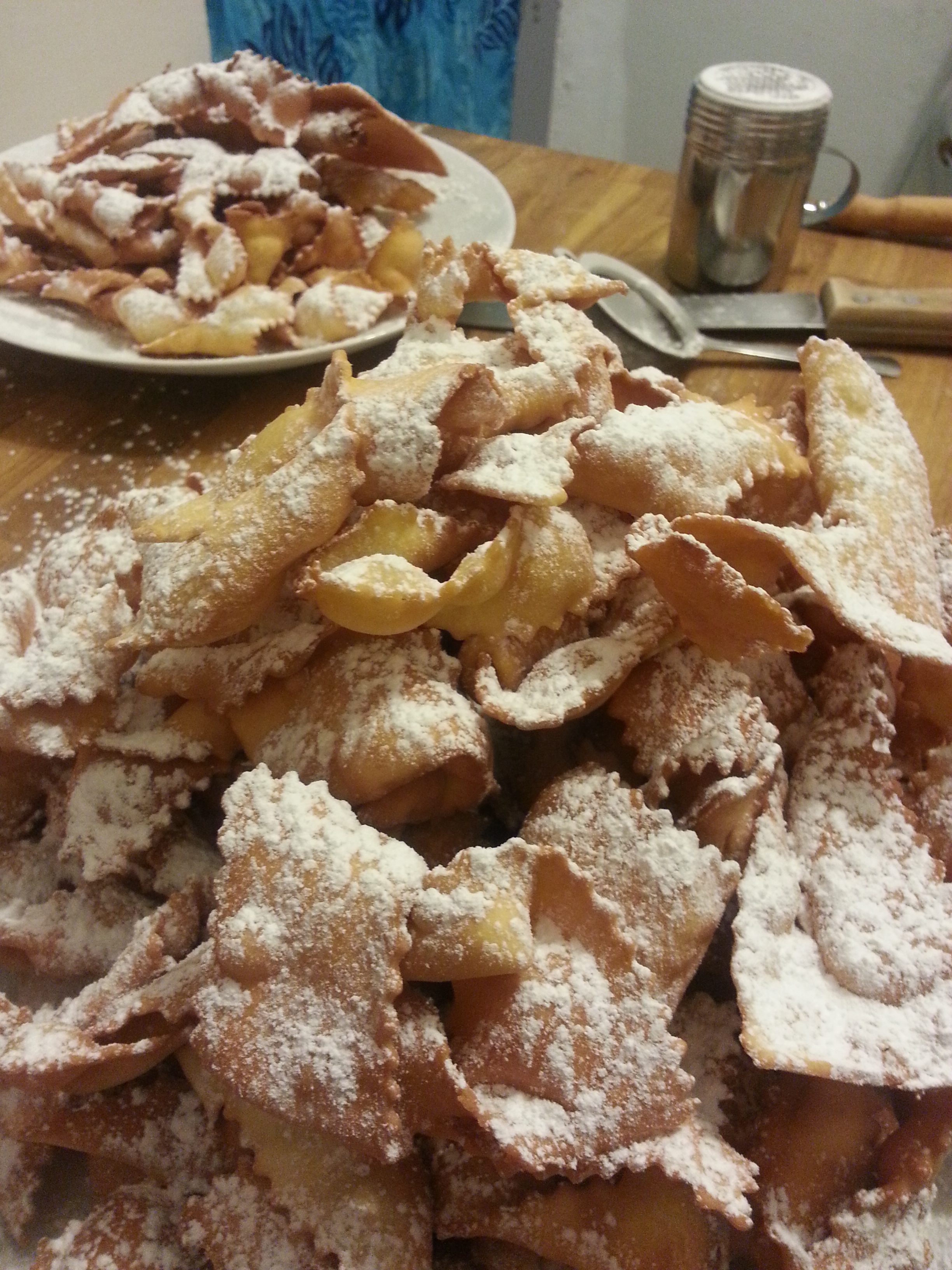
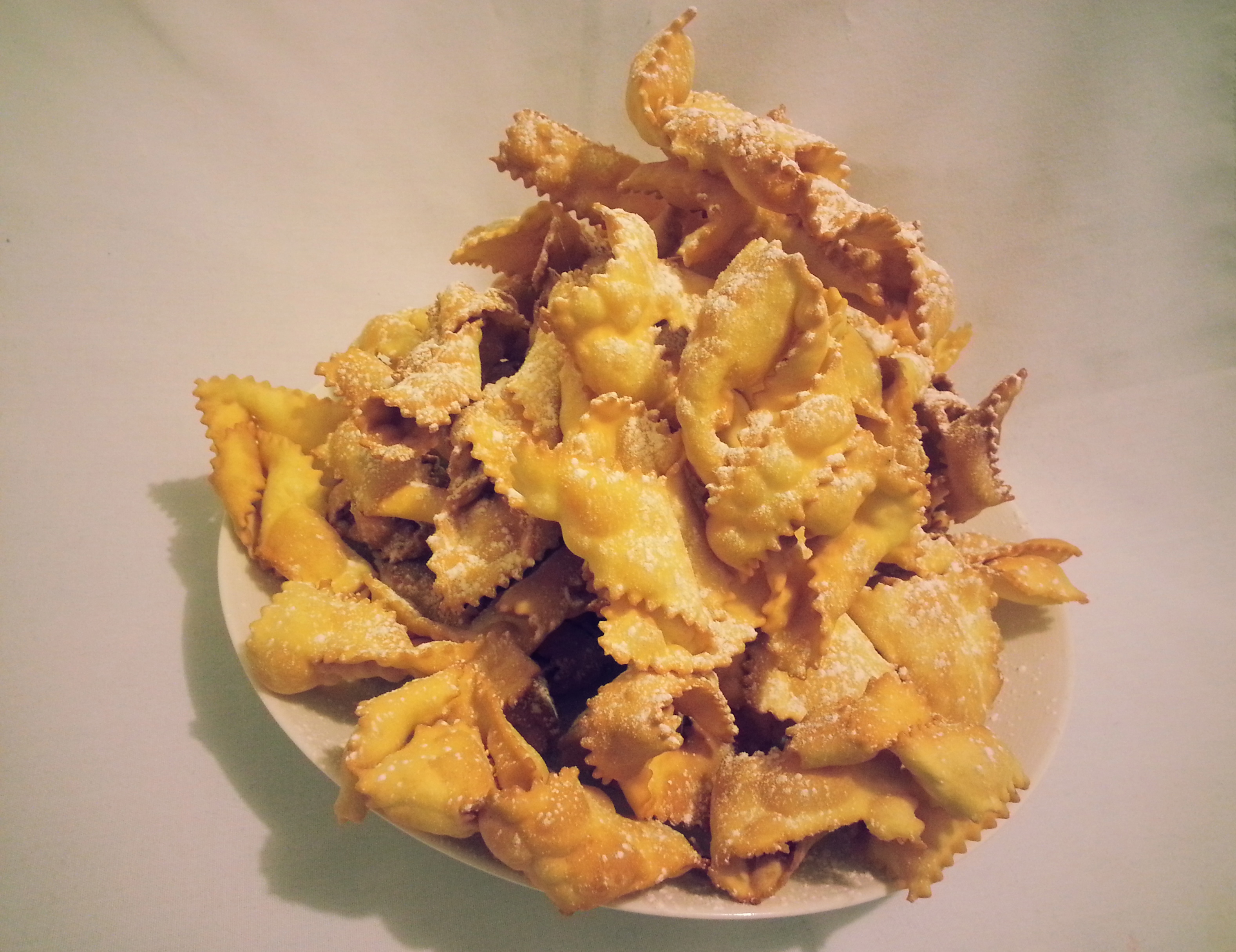
cenciItalians love all things fried, from the savory to the sweet.  The time before Lent begins on Ash Wednesday, which this year is February 18,  is especially filled with traditional and seasonal fried sweets.   The time is known as Carnevale and culminates on Shrove Tuesday, at which point the decadence ends and the fasting of Lent begins.

Well, not in Tuscany, where they go right from fried doughs for Carnevale to fried rice fritters for the feast of St Joseph in March!

The sweet fried doughs for Carnevale are known by different names throughout Italy:  chiacchiere, lattughe (lettuce leaves), and cenci (rags) in Tuscany.  There are other fried doughs served all through the year, such as bomboloni (doughnuts) for breakfast, or gnocco in Emilia Romagna, which aren’t sweet but are served with prosciutto di Parma as an antipasto.  But the chiacchiere, cenci and lattughe are found only in January and February.

Cenci

2 1/2 cups AP flourcenci
3 eggs
pinch of fine sea salt
1/4 cup sugar
1/4 cup sweet liquor (tuaca, cointreau)
1/4 cup water

Mix all ingredients together until a soft dough forms, adding additional flour if too sticky to handle.  Let it rest 15 minutes then roll through a pasta machine to form thin strips, adding flour when necessary.  Fry in peanut oil and dust with powdered sugar.

Filed Under: Blog Categories

January 19, 2015 by Gina Stipo Leave a Comment

Pancetta Arrosto – rich roasted pork belly

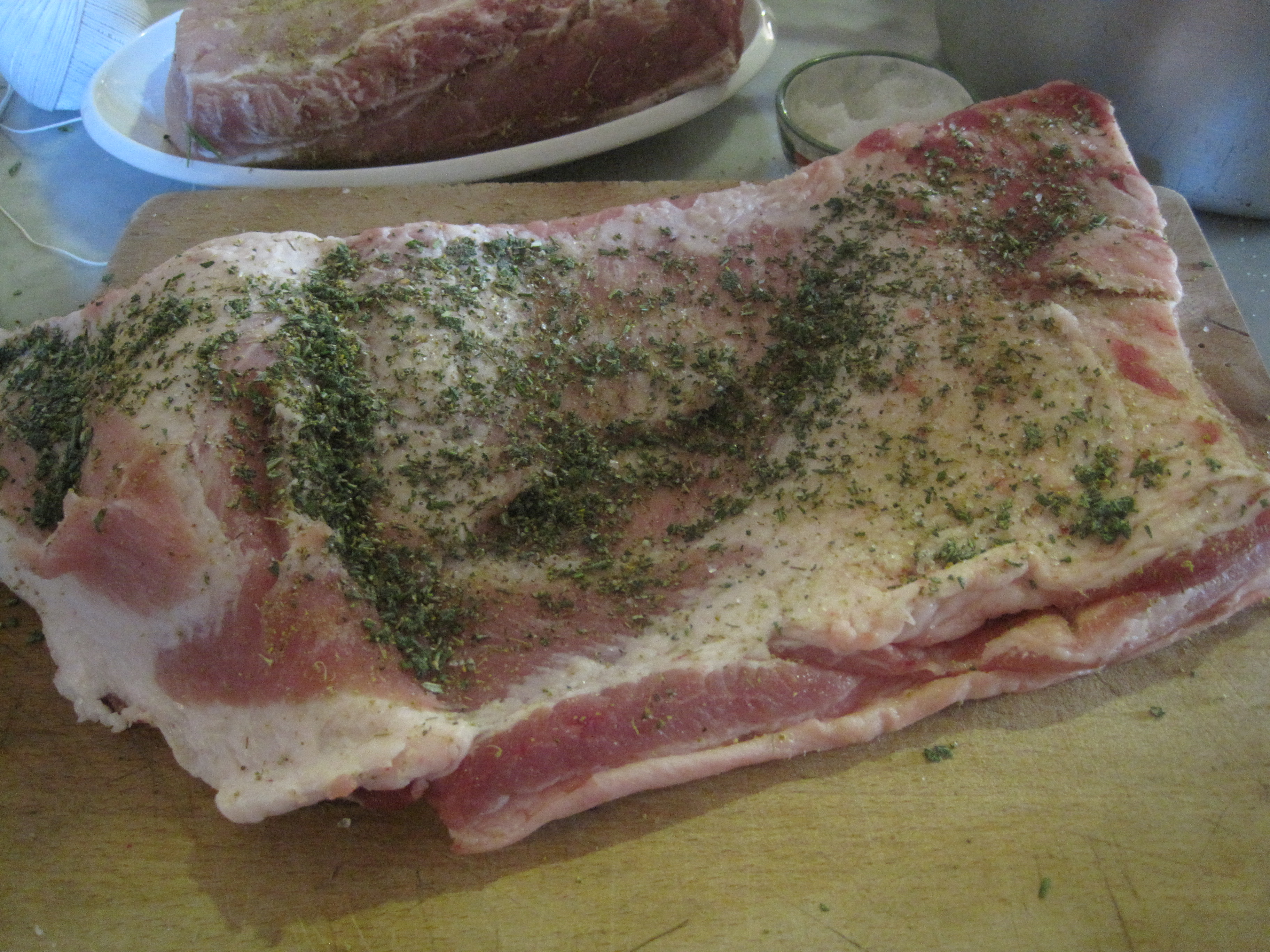
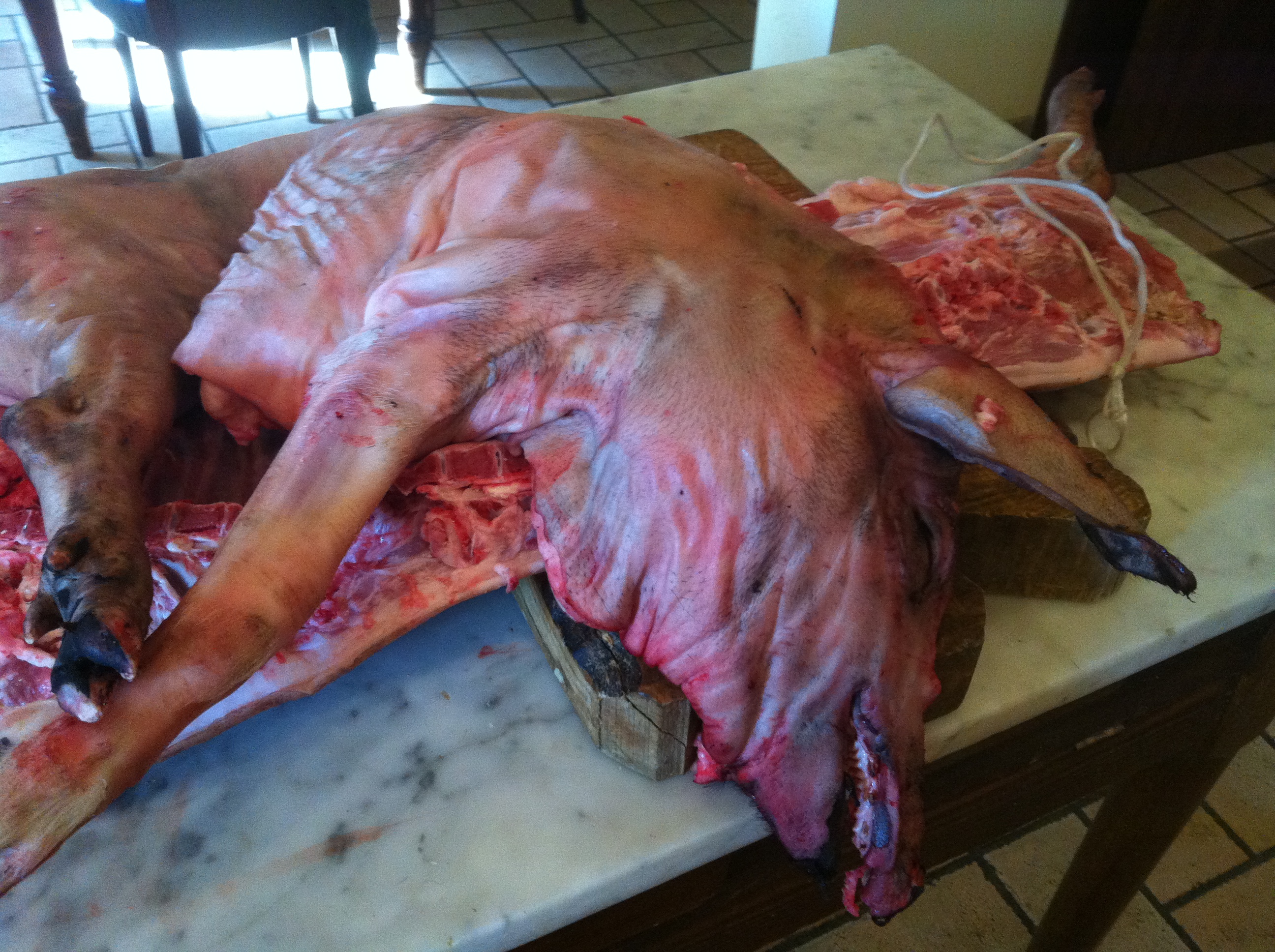
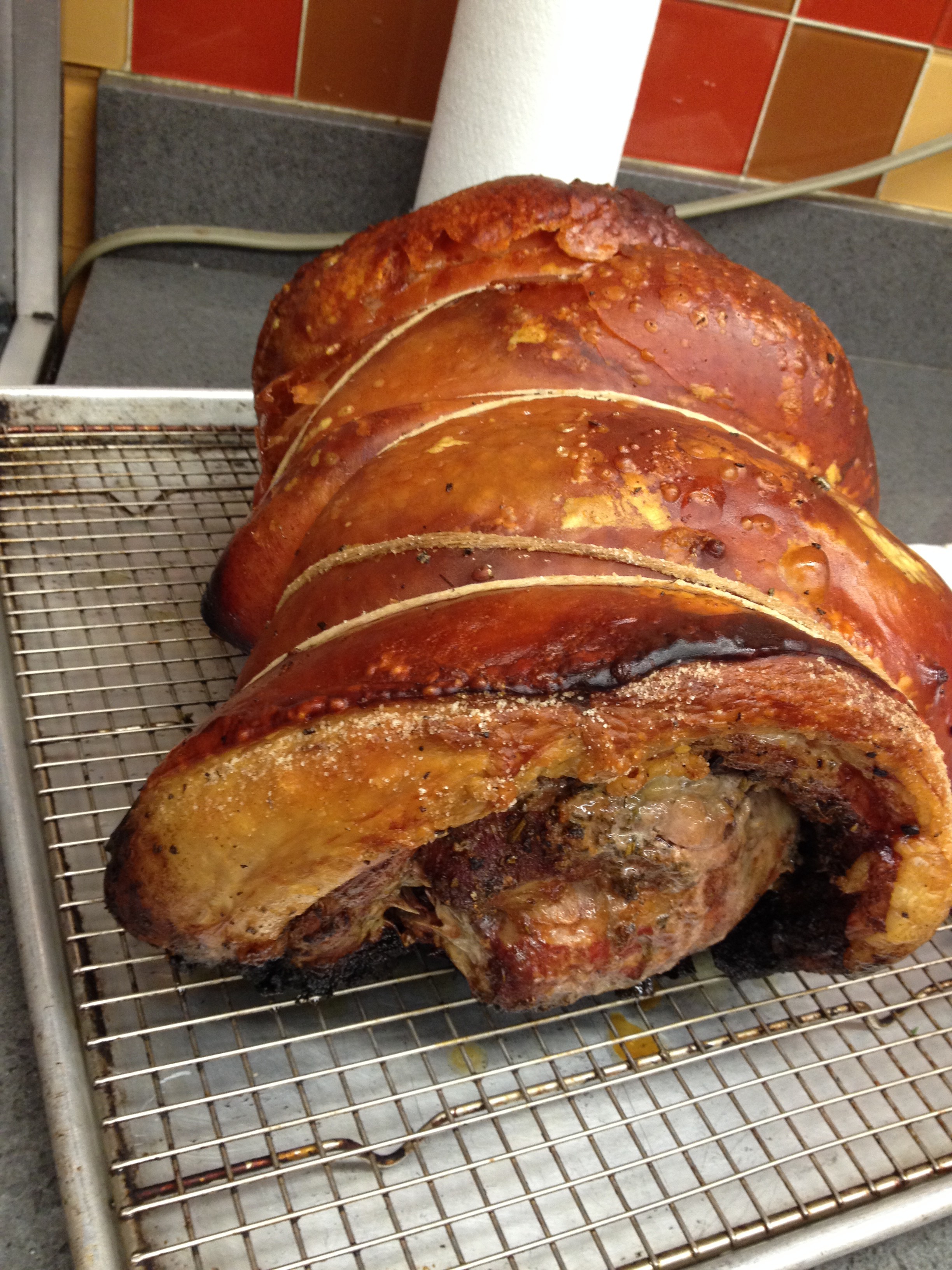
pork belly w tuscan herbsYears ago in Tuscany and most of Italy, before fresh meat was readily available for purchase in the grocery store or a butcher shop, fresh meat was rare on the common dinner table.  Roasted and braised meats or grilled steaks were only available during the hunting season or in the winter when the pigs were butchered.  The rest of the year it was vegetables, bread and pasta, and the protein options were cured meats like salami, prosciutto or pancetta, with the occasion chicken or rabbit for Sunday dinner and special occasions. butchered pig

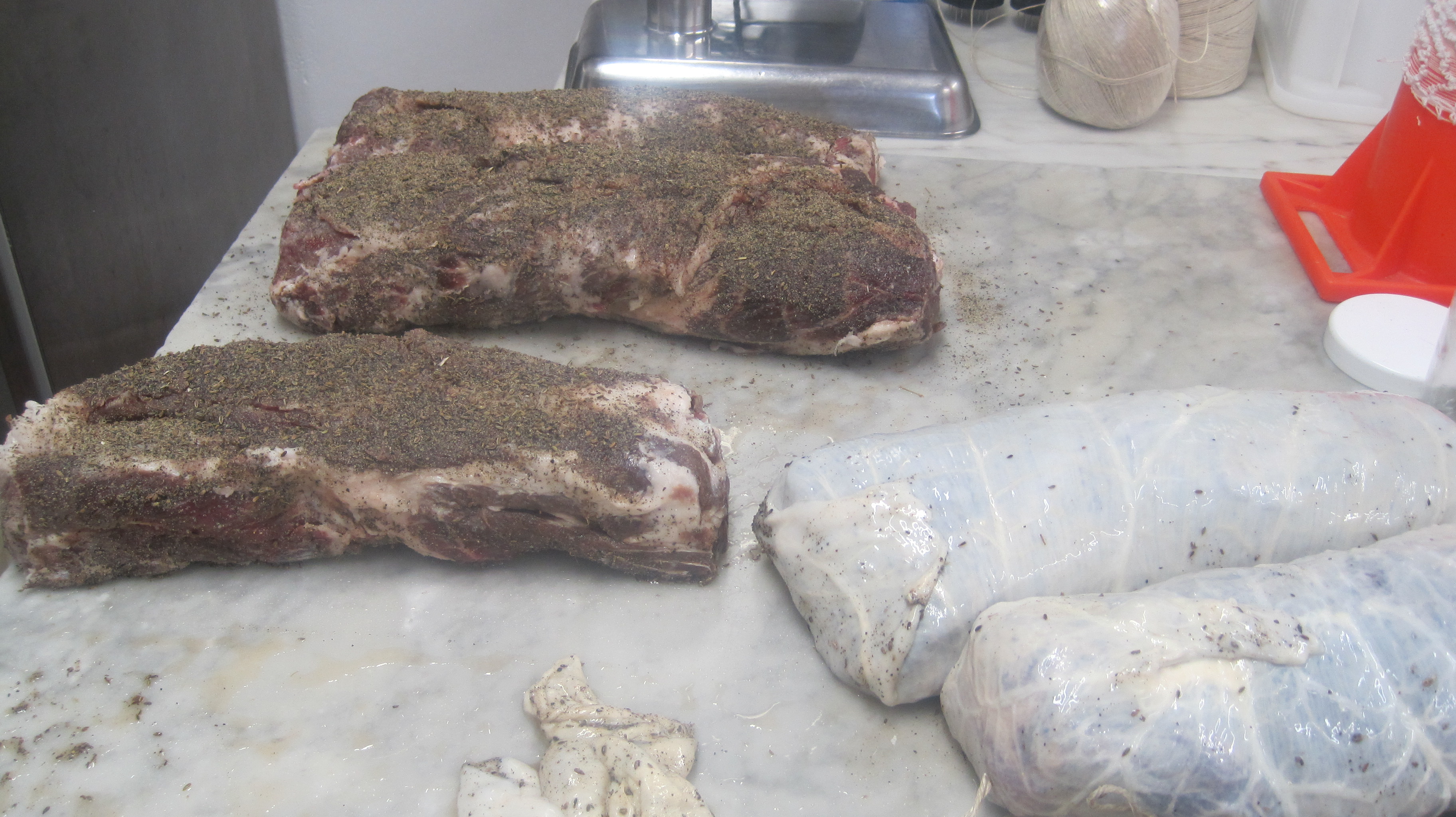
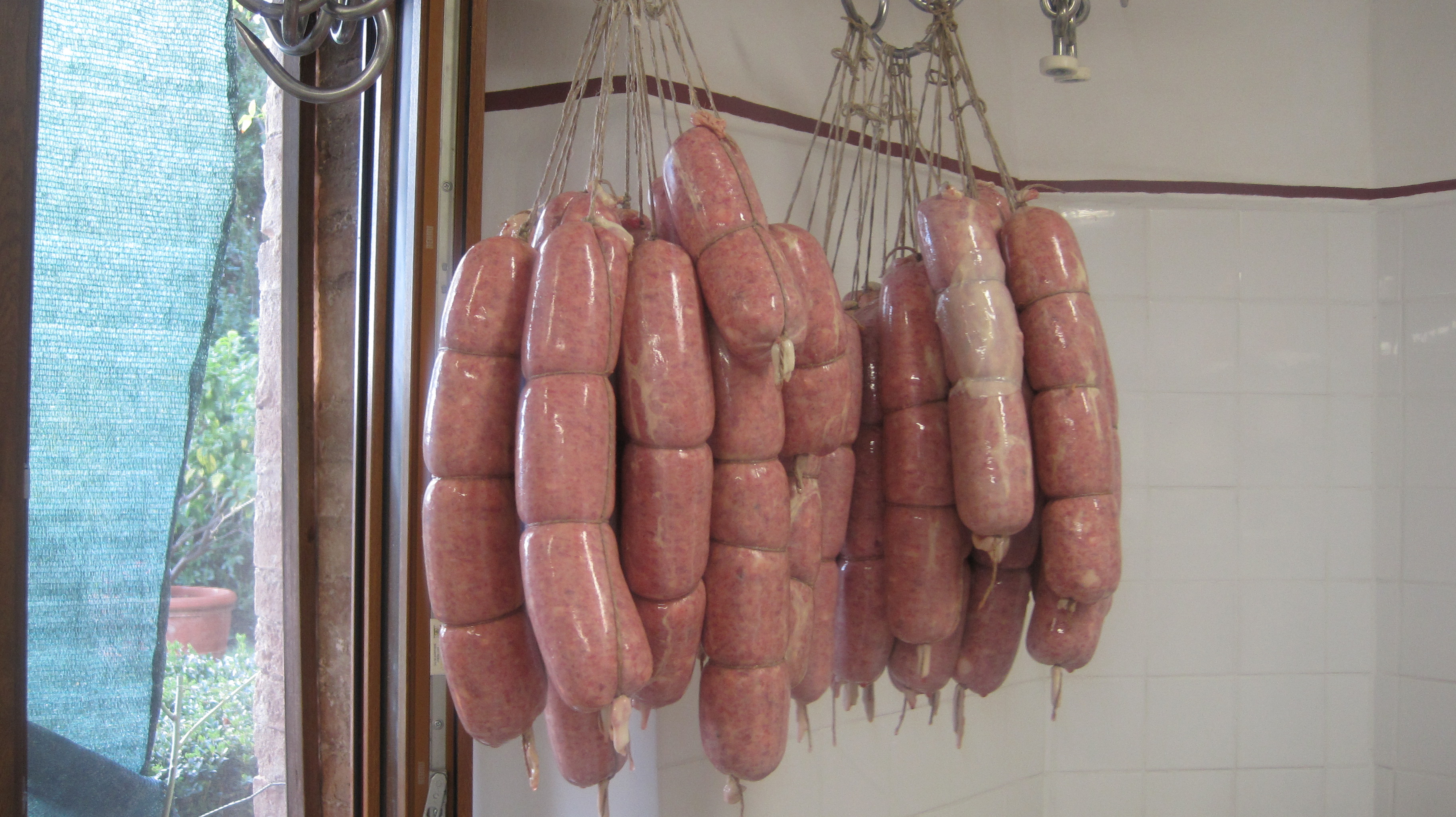
January and the winter months were traditionally the time that the pigs were slaughtered, when the cold weather would keep the meat from spoiling before it had a chance to begin to cure.  Hams, necks, and bellies and were salted and laid down to become cured pancettaprosciutto, capocollo and pancetta.  The head was boiled in spices and lemon and picked over to be made into soppressata.  All the rest was chopped and ground to be made into sausages, cured in olive oil, or salami, mixed with fennel, garlic and black pepper.salumi

All that is still done, but in modern, temperature controlled facilities on a year round basis.  The seasonality of the pig slaughter has mostly disappeared and with it the appreciation of the rarity of a great chunk of roasted loin, shoulder or pork belly.

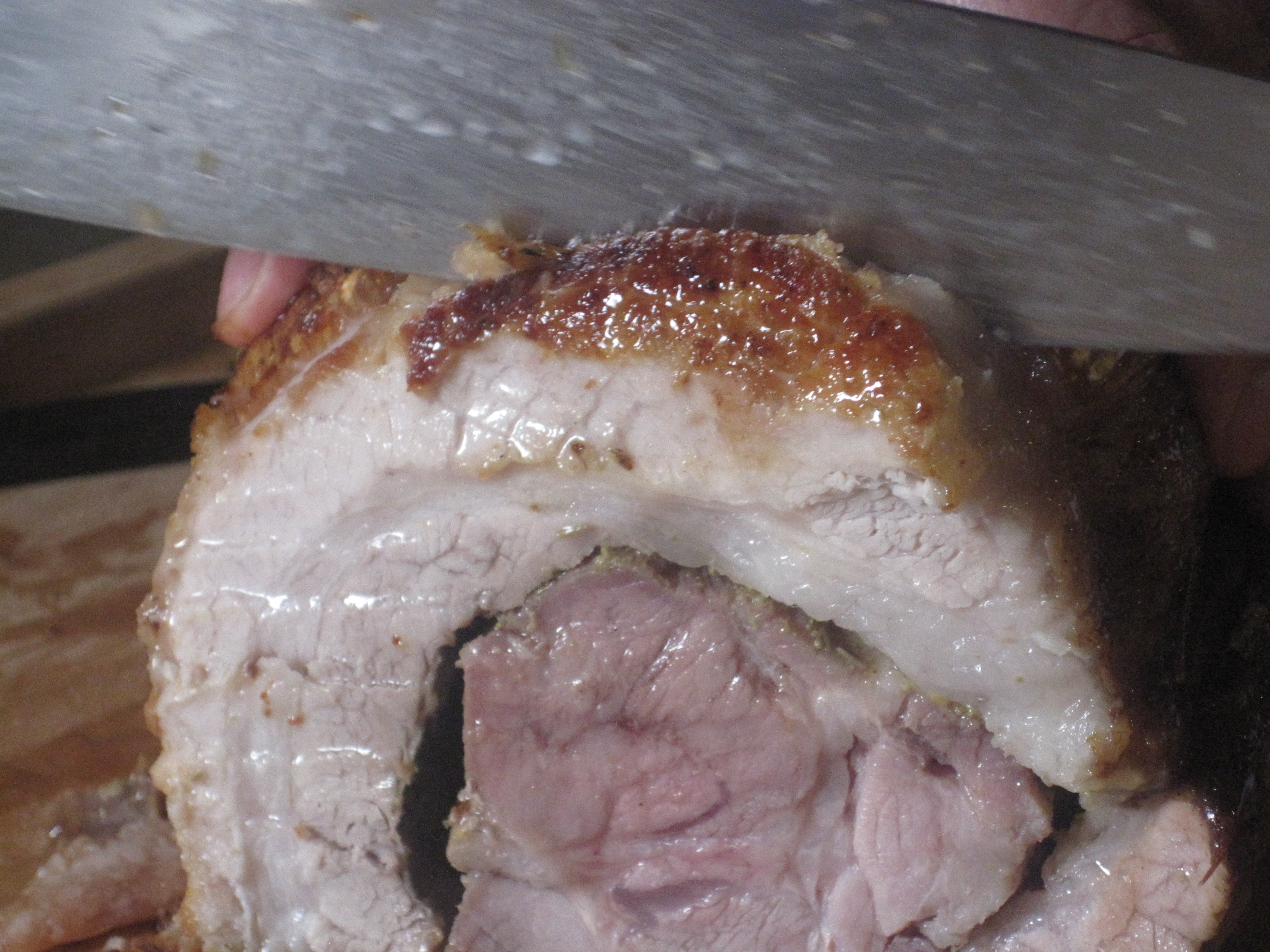
pancetta arrostoDuring my first winter in Tuscany, one of my most exciting discoveries was roasted pork belly, or pancetta fresca arrosto.  To me, the best part of roasted pork was always the fat on the outside, and the cuts had become so lean and dry in the US it had lost its appeal.  But all that fat, hot and roasted, with the skin brown and crunchy, was sheer heaven.

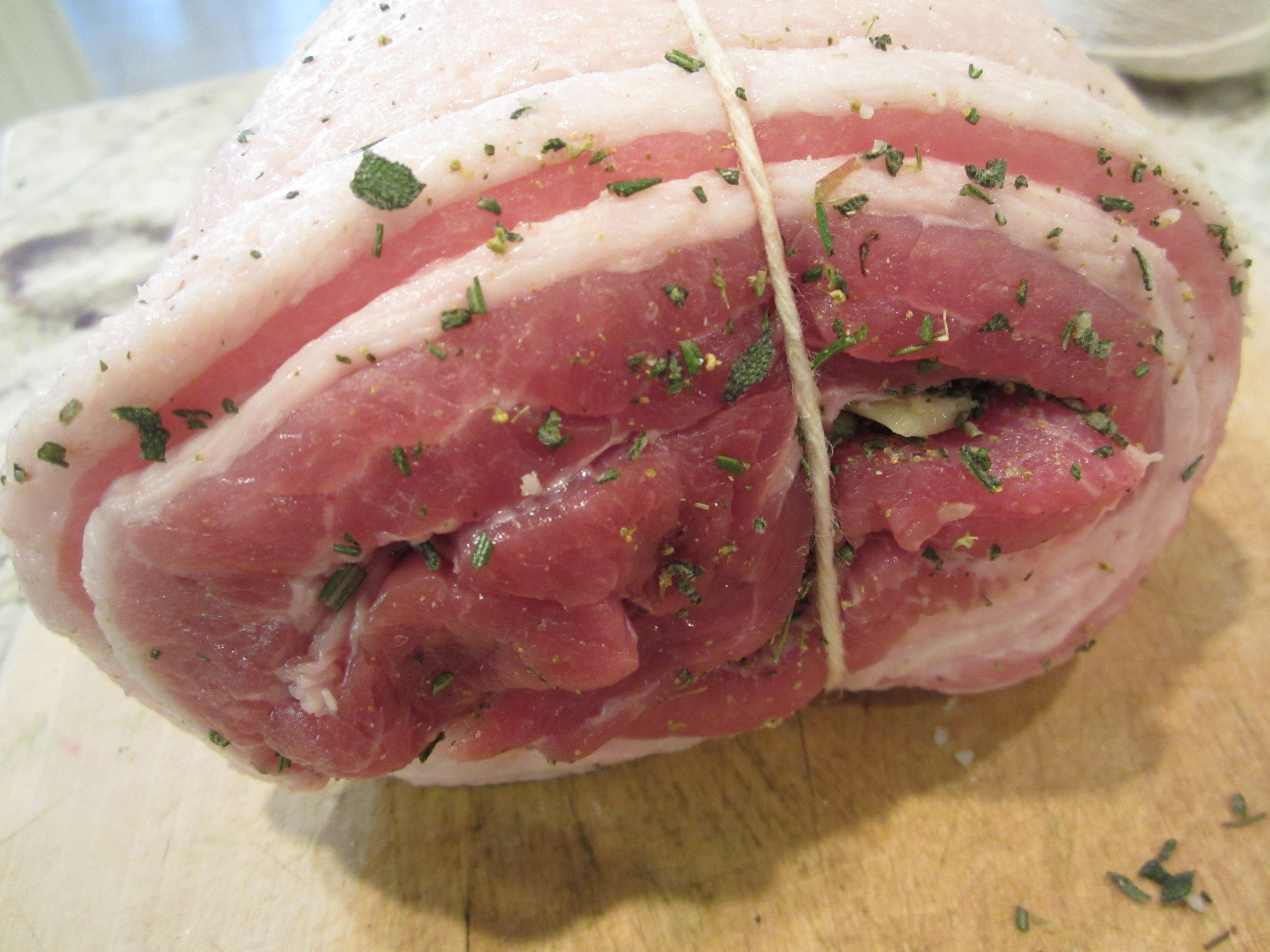
Pancetta in Italian comes from pancia, which is the belly of the pig, pork belly rolledand can be cured, smoked or raw.  The first time I saw a large slab of raw pancetta in the butcher window, rolled and stuffed with rosemary and sage, I knew I’d found dinner.

The pancetta can be rolled on it’s own or rolled around a pork shoulder. pork belly e shoulder Because the pork belly must cook at a high temperature until it’s crunchy and thoroughly cooked, it’s unwise to roll it around a pork loin, which will overcook and become dry.


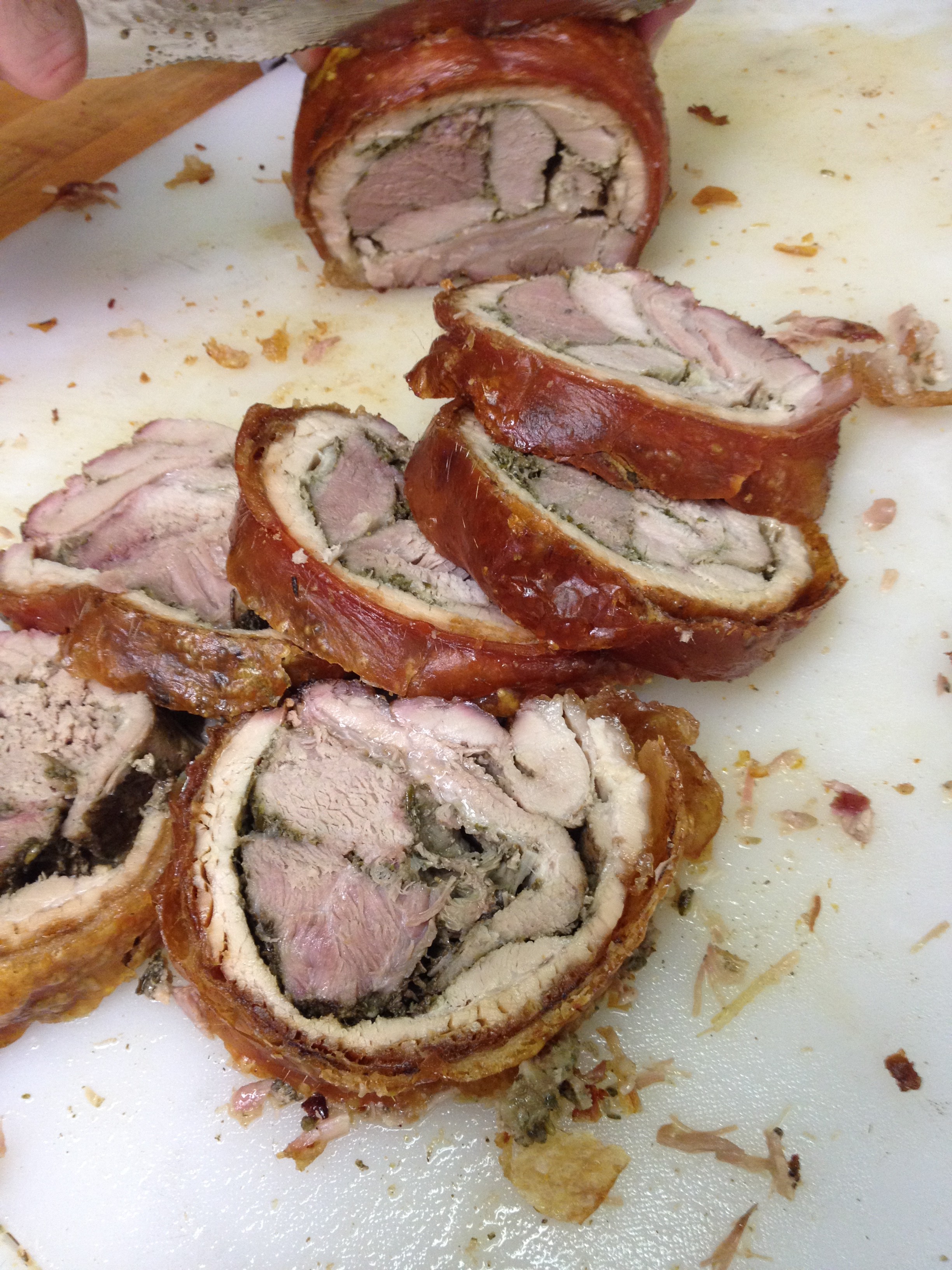
The easiest way to cook a pork belly, is just to salt it and put it on a bed of sage and rosemary sprigs and whole garlic cloves.  Add some white wine to the pan and put it in a really hot oven, at 425-450, until it’s gorgeous with a brown crunchy skin and the juices from the fat running out and making your mouth water.  Take it out and put it on a large cutting board for 10 minutes.  Chop it with a large chef or butcher knife and serve it with sauteed fennel and winter greens, roasted potatoes and good bread.IMG_1254

You can also get a pork roast and roll the pork belly around it.  Salt the shoulder, rub it all over with a paste of fresh rosemary, sage and garlic, and wrap the pancetta around it, skin and fat side out.  Tie the roast well and follow the above roasting instructions.

Enjoy the winter!  Buon Appetito!


Filed Under: Blog Categories, Cured meats, Tuscany, winter Tagged With: cured pork, pig butchering, roast pork, winter meat

  • « Previous Page
  • 1
  • …
  • 6
  • 7
  • 8
  • 9
  • 10
  • …
  • 18
  • Next Page »

Recent Posts

  • Italian Cuisine in the World!
  • Warming Winter soups
  • Visit Emilia Romagna
  • Chestnuts for the Fall
  • Anchovies & colatura, ancient Italian umami

Categories

  • Abruzzo
  • aperitivo
  • Basilicata
  • Blog Categories
  • Campania
  • cheese
  • chianti classico
  • Cured meats
  • dessert
  • Emilia Romagna
  • festive Italian dishes
  • Frittura
  • Lazio
  • Louisville
  • meats
  • olives/olive oil
  • Pasta
  • Piedmont
  • Puglia
  • Sagre e Feste
  • Salt
  • seasonal & summer fruit
  • seasonal vegetables
  • Sicily
  • soups
  • Spices
  • supper club
  • Tuscany
  • Veneto
  • Wine
  • winter
Interested in seeing Italy with Chef Gina?
Then check out her schedule of immersion cooking classes and tours in Italy through Ecco La Cucina!

Handcrafted with on the Genesis Framework