 I often get questions on balsamic vinegar and how to judge the quality and discern the fakes from the real thing. There are two ways to tell whether it is an authentic aceto balsamico, the kind of bottle and the ingredients. The first is the bottle with its label: the real DOP product from Modena will be in a round bottle with a square bottom and a 3 inch neck; the label will read “Aceto Balsamico Tradizionale di Modena DOP“. Note the word “tradizionale“, meaning traditional, and DOP, the Italian guarantee that a food product adheres to specific, controllable guidelines. Anything else is called simply Aceto Balsamico di Modena, which means nothing.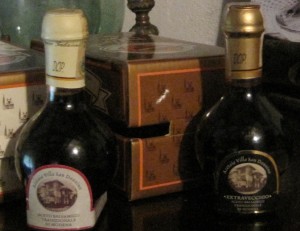
The second way is to read the ingredients. Real balsamic vinegar has only one ingredient and that is grape must (mosto d’uva), which is cooked grape juice. Imitation balsamic vinegar has a combination of concentrated grape must (think the difference between orange juice and concentrated orange juice), wine vinegar, caramel coloring, and a variety of thickeners, stabilizers and chemical additives.
Authentic balsamic vinegar is made seasonally and aged from 12 to 25 years in a series of wood barrels, each made of a different wood of graduated size, imparting a nuance of their own: cherry, ash, oak, juniper, acacia, chestnut and mulberry. Production is on a small scale and is done by hand.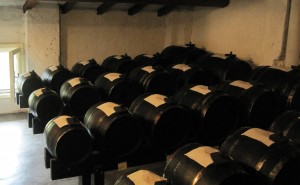
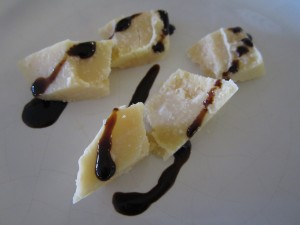
Imitation balsamic vinegar is made industrially in stainless steel tanks and on a large scale. If wood is used at all, it is short term, 60 days, and is just oak. Much of this vinegar is good enough to put on a salad, but not good enough to be used as originally intended. Traditional aceto balsamico is not a vinegar at all, but a condiment and as such is drizzled on steak, fruit and parmigiano, even occasionally drunk as a digestivo out of tiny glasses.
The great majority of what you find in tourist shops is an artificial product, made with concentrated grape must and vinegar and put into a pretty bottle. The exception is the guy who’s making authentic balsamico and not paying for the DOP stamp of authenticity, but only believe that when he’s a personal friend.
A lovely product and very expensive, still made in the attics of large villas in the countryside surrounding Modena. The story goes that when a baby girl was born, a battery of aceto balsamico barrels was started the year she was born and aged slowly in the barrels. When she was old enough to marry, part of her dowery was the small oak barrel of aceto balsamico tradizionale, representing the wealth of the family.

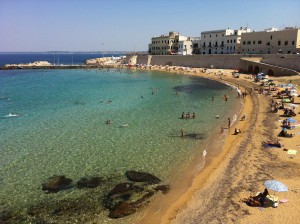 Last summer I fell in love with Puglia. My house for a week in August had a vaulted stone ceiling, a large kitchen, and a rooftop terrace with a view of the sea. Searching out the traditional dishes of the region, I found much that was better suited for cold weather: heavy on the braised meats, winter greens like rapini and pureed fava beans. August was too hot and sunny for such warming winter food and after a day at the beach or in dusty little towns, all I wanted was simple food that required little cooking: fresh burrata and mozzarella, local tomatoes and olives, cold seafood salads dressed with olive oil and lemon. Along with a chilled bottle of local white wine, it was simple, fresh and perfect.
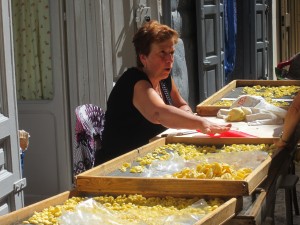 In Bari you can still find the old quarter of the city where the women sit outside their houses at tables set up in ancient marble alleyways, chatting with each other as they spend the morning rolling the pasta into the flattened discs called orecchiette, or “little ears”. A traditional cottage industry, the pasta is then dried in the open air on large screens and sold in shops and restaurants.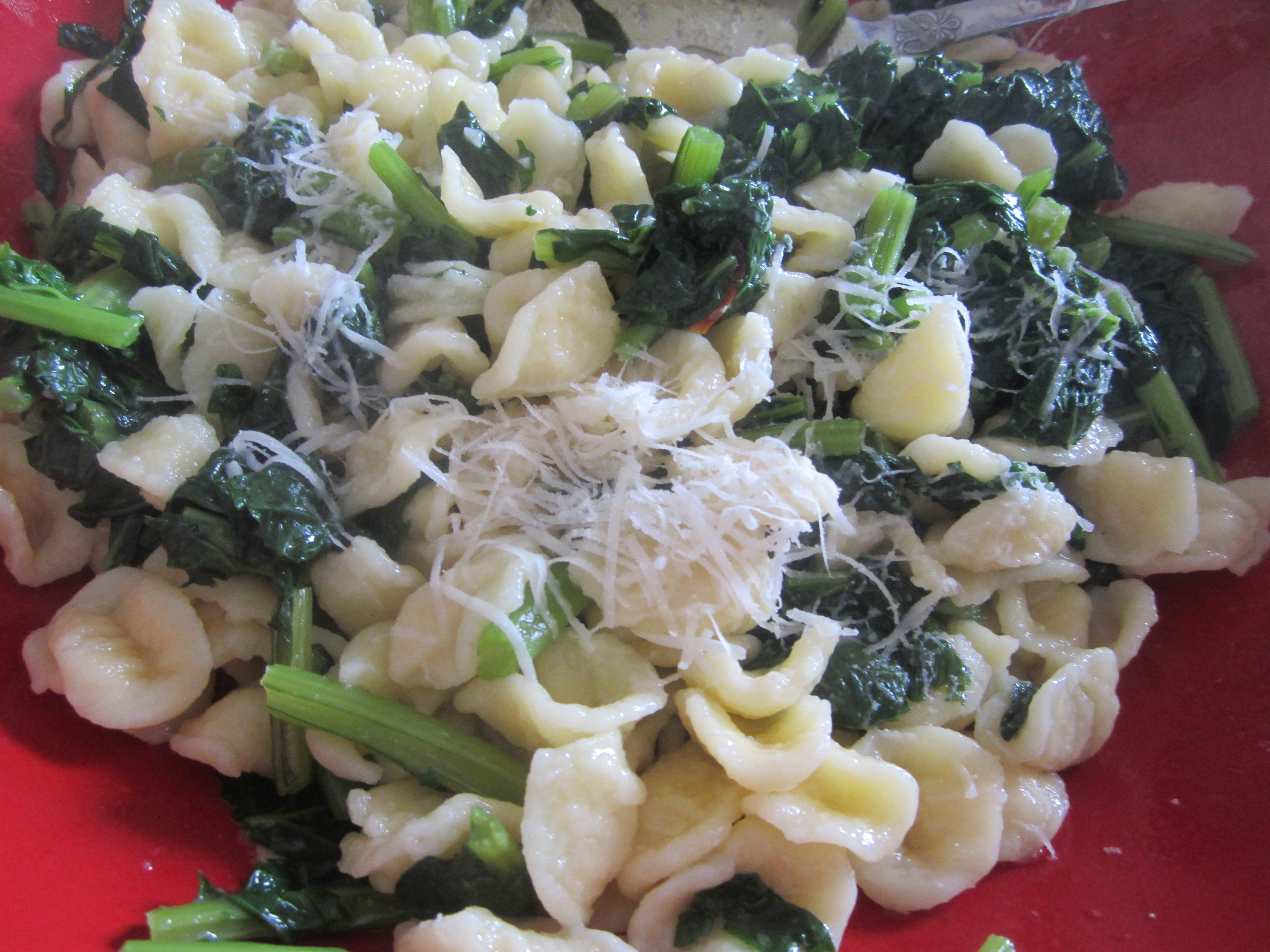
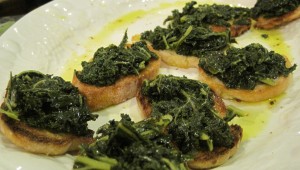 I read one of those columns by some food writer about what’s in and what’s out for 2013, and on the list of what’s out was kale. And I thought, how can kale be out when it’s hardly been in?? It’s so good for you and is so abundant right now that we should work a little harder to figure out how we can work it into our diets. We can’t give up so easily and declare it out of fashion so quick.